ANGeLiC: Turning a battery research into EU funded project
Client
Leading academic-industry consortium
Client Overview:
A group of researchers from the Centre for Advanced Materials Applications (Slovak Academy of Sciences), J. Heyrovský Institute of Physical Chemistry, Warsaw University of Technology, Technion – Israel Institute of Technology, and Imperial College London approached us.
During the proposal development, the group of researchers evolved into a mature consortium. It included nine academic institutions and one industrial partner.
They had a strong scientific interest in lithium-sulfur (Li-S) battery technologies. The client aimed to submit a funding application for the Batt4EU Partnership call HORIZON-CL5-2024-D2-02-02, which focused on post-lithium-ion technologies and relevant manufacturing techniques for mobility applications (Generation 5).
The collaboration combined expertise in electrochemistry, materials science, and sustainable manufacturing. The consortium’s goal is to develop next-generation energy storage solutions for electromobility.
Challenge:
The research partners who approached us had a promising idea that aligned with the objectives of the call. However, this alone was not sufficient for the successful implementation of the project. We therefore faced several challenges:
- Refining the project concept and aligning it with the technical and political expectations of the call within the Batt4EU partnership.
- Structuring the consortium of partners, clearly defining each partner’s role and responsibilities.
- Demonstrating how the project addresses current industrial needs and preparing a coherent, competitive proposal within tight deadlines.
Our Approach:
During the implementation of the task, we applied a comprehensive approach encompassing conceptual, creative, and organizational work:
- Provided support to researchers at the initial stage of project concept development, particularly by helping to develop proposals in compliance with the requirements of the Horizon Europe program.
- Assisted partners in refining their scientific ideas, clarifying objectives, and aligning them with the priorities of the Batt4EU partnership.
- Managed the creation of the work plan, impact and exploitation strategy, budget, and submission materials, ensuring that a coherent and competitive proposal was ready for implementation from day one.
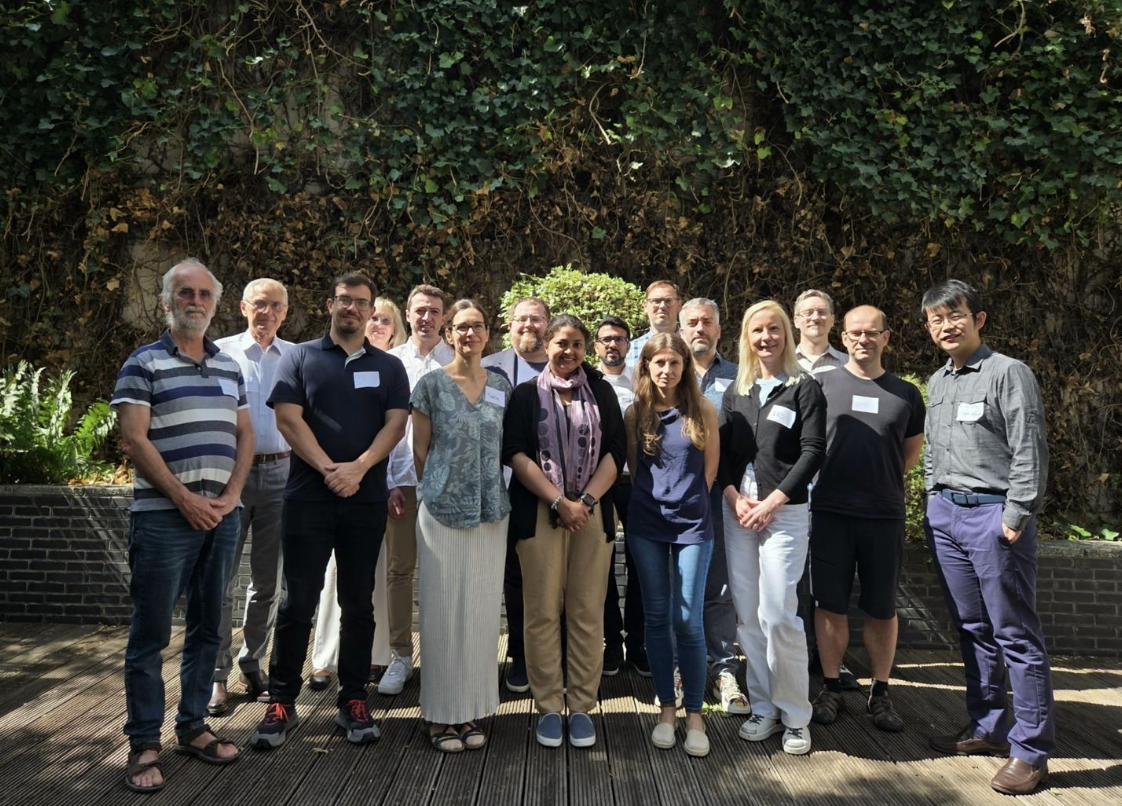
- Organized a series of interactive workshops and structured sessions on scientific writing.
- Assumed the role of coordinator and the leader of communication, dissemination and exploitation, overseeing project processes, administrative tasks, and financial management. This decision was taken after recognizing that none of the existing consortium partners were willing to shift focus from research and technology development to administration. As a result, this provided strong administrative leadership and a neutral platform for effective project management.
Results & Impact:
As a result of this comprehensive effort, Civitta successfully brought the ideas to fruition. In particular, the ANGeLiC project was funded and launched in June 2025. The project is currently developing a new generation of lithium-sulfur batteries using ALD/MLD (Atomic and Molecular Layer Deposition) technology to overcome critical performance barriers, enabling longer cycle life and faster charging capabilities.
ANGeLiC also focuses on environmentally friendly surface coatings and manufacturing processes, paving the way for the production of high-performance, sustainable batteries suitable for heavy-duty electric vehicles. From a scientific perspective, ANGeLiC strengthens Europe’s competitiveness in post-lithium battery research. From an organizational perspective, it has established a new model of collaboration that effectively integrates academic innovation with industrial application.
Key Takeaways:
Even well-developed scientific ideas require early-stage strategic support, structured guidance, and alignment with EU priorities to become competitive Horizon Europe proposals. Successfully combining Civitta’s expertise in proposal writing, consortium building, and Horizon Europe coordination with the creative input of the fellows resulted in a high-impact, well-structured consortium with clearly defined roles and responsibilities.
ANGeLiC demonstrates how Civitta bridges the gap between scientific ambition and implementation capability, turning research ideas into successful, well-managed Horizon Europe projects. Effective collaboration between research and industrial partners, supported by structured workshops and coordinated management, can accelerate innovation and facilitate the development of sustainable, high-performance technologies.