- Tourism cluster assessment & stakeholder engagement (fieldwork, asset mapping, interviews).
- Strategic vision and tourism development plan for Goris and surrounding villages.
- Investment project identification & feasibility studies (60 ideas → 20 assessed).
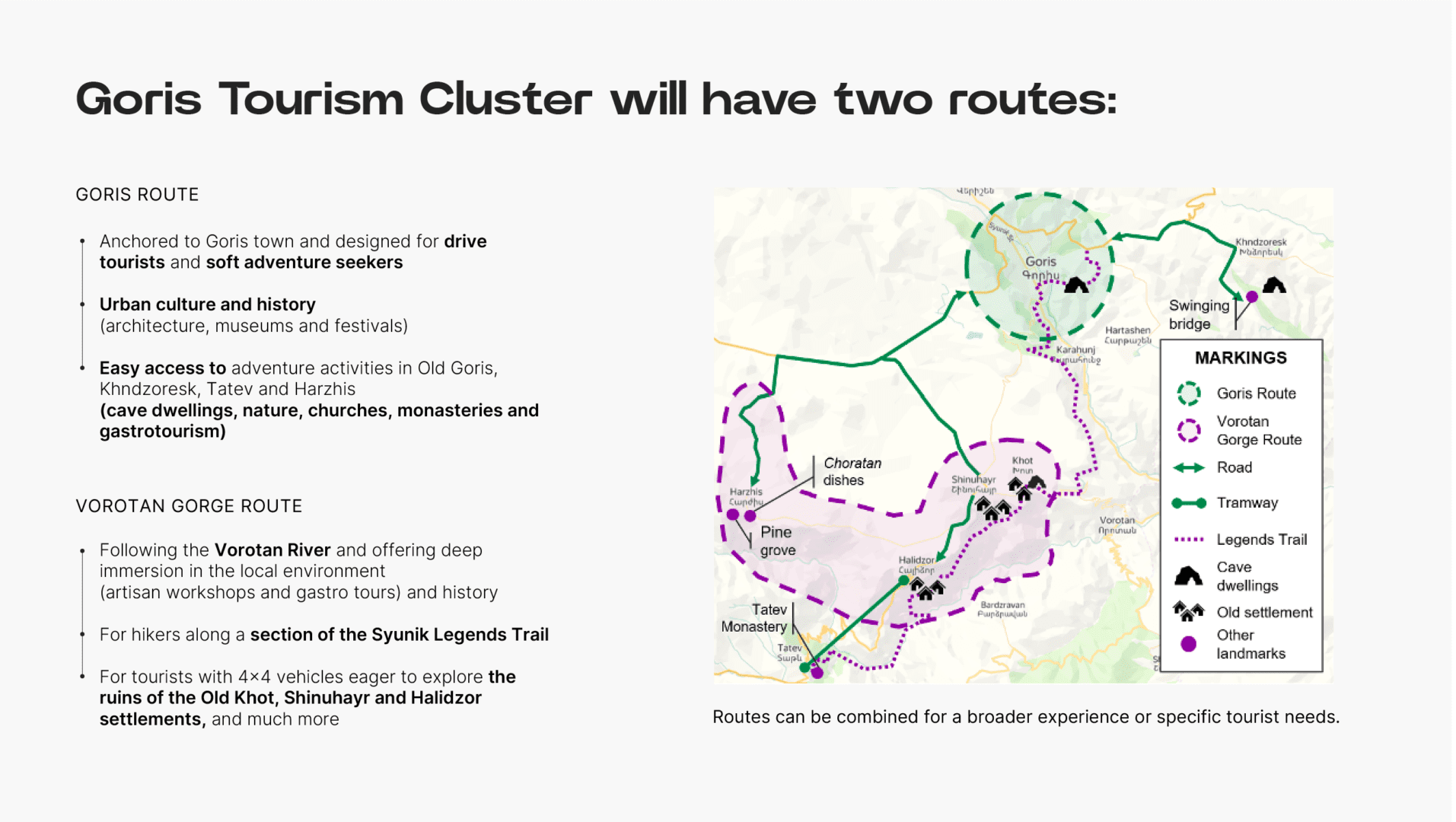
- Design of tourism routes and infrastructure improvements to enhance accessibility and visitor experience.
- Economic impact modeling including visitor forecasts, NPV and IRR analysis.
Transforming Goris into a thriving tourism cluster through strategic development
Client
Armenian Territorial Development Fund, Ministry of Economy of Armenia and Tourism Committee, Financed by World BankClient Overview:
Civitta as a consortium lead, in collaboration with Strategic Tourism Advisors (THR), supported the Ministry of Economy of Armenia,Armenia’s Tourism Committee and the World Bank to inform the potential development and improvement of the World Bank funded Armenia Tourism and Regional Infrastructure Project, with a focus on transforming Goris into a thriving tourism cluster.
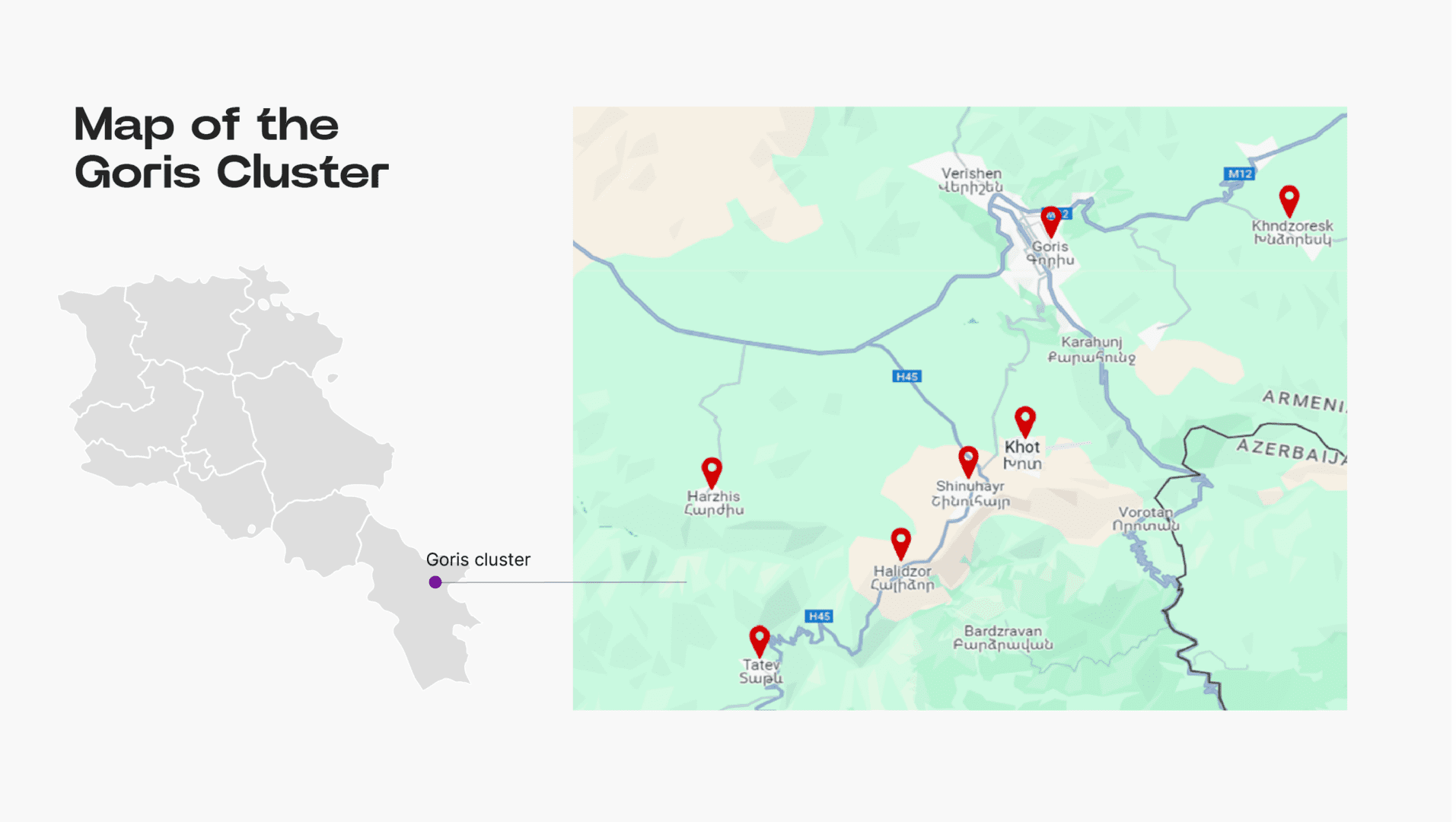
Goris is a town of 19,500 people in the Syunik region, surrounded by villages rich in heritage, such as Khndzoresk, Tatev, Halidzor, Shinuhayr, Harzhis, and Khot. Collectively, these communities weave a tapestry of ancient monasteries, cave settlements, medieval churches and natural gorges. This underleveraged mix of cultural and natural assets provided the foundation for a distinctive, high-quality tourism destination.
Challenge:
Most visitors pass through Goris en route to Tatev, stopping only briefly – a pattern that limits local spending and economic benefits. Goris and its villages also suffered from aging infrastructure, seasonal staffing shortages and a fragmented tourism offer.
The cluster’s attractions are underused and lacked a coordinated development strategy. The challenge was to transform Goris and its surroundings into a unified, high-quality tourism cluster – one that would extend stays, preserve heritage and boost local incomes.
Our Approach:
Civitta’s approach combined rigorous analysis with deep local engagement. We conducted fieldwork across the cluster – site visits, asset mapping, interviews and focus groups with government authorities, local businesses and community representatives.This participatory process ensured the strategy reflected local needs. Building on these insights, our team mapped the tourism value chain, identified gaps in services and infrastructure, and developed a strategic vision with a prioritized investment portfolio of projects. Civitta identified around 60 potential investment projects, shortlisted and conducted a feasibility study for 20 projects.
Planned projects included solar-powered lighting and signage in the Old Goris cave complex, and an interactive museum recreating the village cave-dwelling experience. Key road upgrades were designed to open remote heritage sites year-round. Each idea was vetted through prefeasibility studies to confirm viability. The team has developed a future vision and tourism routes for the cluster, dividing it into two distinctive routes with different offerings. Throughout, they have worked closely with the Tourism Committee and World Bank to ensure the plan was ambitious yet implementable.
Services Provided:
Results and Impact:
The plan’s projected impacts are significant. By improving infrastructure and diversifying experiences, overnight stays are forecast to rise 2.5–3 times (to roughly 392,000 per year) and cultural site visits to more than triple. Even same-day visitors are expected to grow (from ~43,000 to 131,000 annually) as more people extend their trips.
In fact, feasibility analysis showed these investments would generate an NPV of about 2.5 billion AMD and an IRR of 16.7%. Over 1,000 new jobs are projected over two decades across hotels, restaurants, guiding and cultural service.
Key Takeaways:
This project illustrates how a holistic, data-driven strategy can transform regional tourism. Civitta’s inclusive approach – convening government, industry and community – ensured the plan was grounded in local reality. By creatively linking heritage (caves, monasteries, festivals) with nature (gorges, trails) and gastronomy, the team crafted interventions that generate excitement and economic value. Rigorous feasibility testing and public–private partnerships gave stakeholders confidence in the plan’s outcomes and created a sustainable pathway for growth.
The Goris cluster case provides a replicable blueprint for other Armenian regions. Its emphasis on responsible tourism, inclusivity and PPP collaboration aligns with global best practices. Key lessons include the power of stakeholder co-creation, the need for evidence-based planning, and the benefits of bundling attractions into a unified offer. Civitta’s expertise in strategic visioning and economic analysis proved decisive in delivering measurable impact and a lasting development pathway.