Kyiv discussion on the roles of government, business, and civil society in reconstruction
instituteOn May 22, as part of the IV International Conference “Ukrainian Leadership in Aid,” a panel discussion was held titled “The Reconstruction Triangle: Synergy of Government, Business, and Civil Society Organizations. Towards URC 2026.”
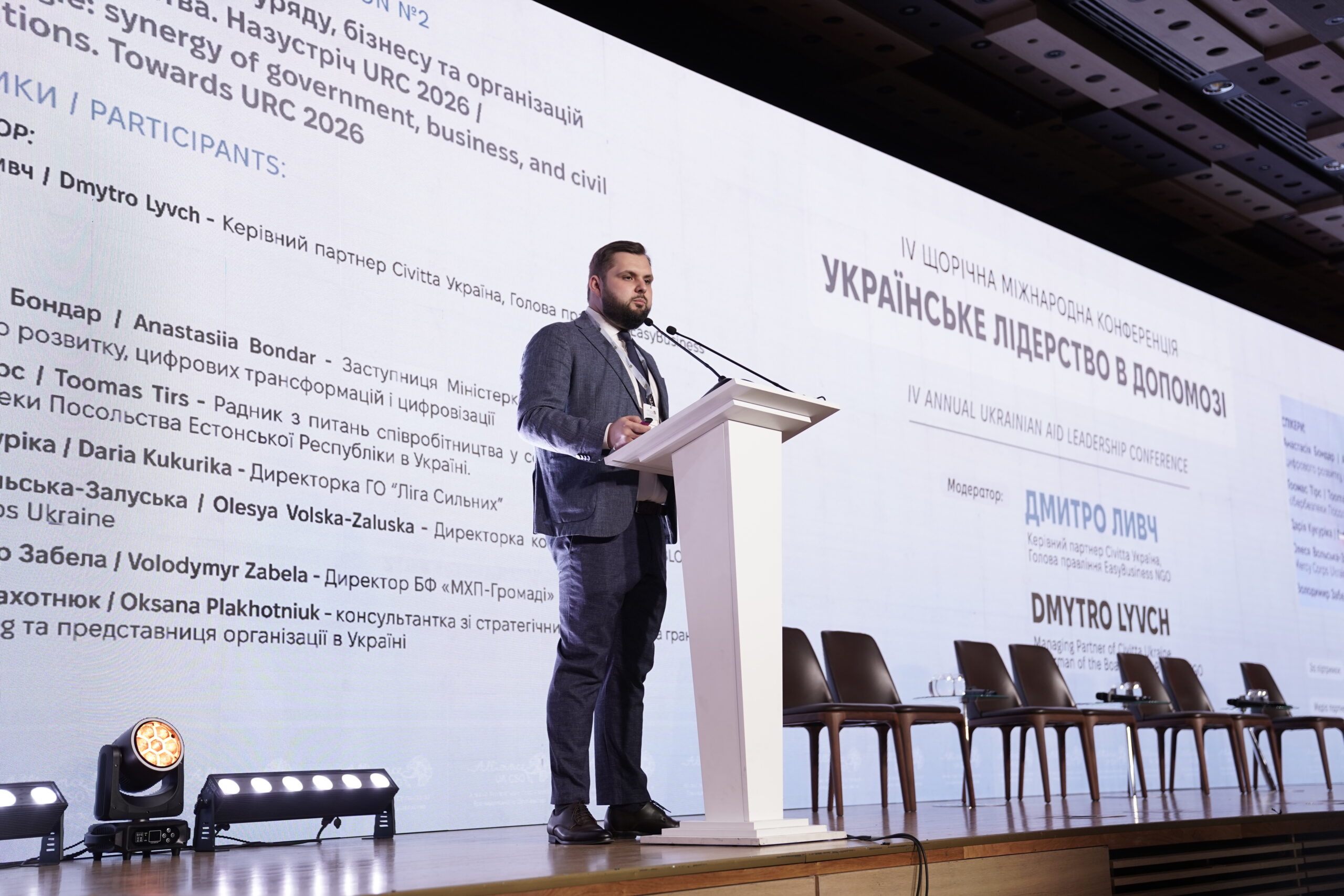
The discussion was moderated by Dmytro Lyvch, Chairman of the Board of NGO EasyBusiness (part of the Civitta Institute network). During the panel, he presented the initial findings of a study on the role of civil society in Ukraine’s recovery architecture. The research is being carried out by Civitta, commissioned by and conducted with the Alliance of Ukrainian Civil Society Organizations, with support from Refugees International (RI) and the Center for Disaster Philanthropy (CDP).
The discussion centered on the shift from fragmented recovery efforts toward systemic cooperation between government, business, international partners, and civil society – particularly in the run-up to the Ukraine Recovery Conference 2026.
The scale of the need
According to RDNA5 estimates, recovery needs have already reached $588 billion – a scale that requires talking not just about financing or individual projects, but about a new architecture of interaction between the state, business, communities, and civil society. Lyvch noted that Ukraine’s recovery isn’t a linear process but several phases happening at once: humanitarian response, stabilization support, early recovery, large-scale reconstruction, and modernization.
Lyvch pointed out that many countries share the same problem internationally: civil society tends to be highly effective in the early stages of crisis response and early recovery, but often loses influence once strategic planning and reconstruction begin. He added that Ukraine has a chance to avoid other countries’ mistakes by integrating its civil society’s crisis-response and local-mobilization experience into formal recovery-governance mechanisms.
Deputy Minister of Culture for Digital Development Anastasiia Bondar stressed that reconstruction must go far beyond pure infrastructure logic – this is a war over culture, language, history, and identity as much as territory. If that culture component isn’t built into rebuilding now (schools, shelters, public spaces), Ukraine risks losing the chance to shape long-term resilience and a sense of identity.
She also referenced the New European Bauhaus principles – the European Commission initiative linking the “green deal” with cultural and social transformation – emphasizing that recovery should be barrier-free, aesthetic, and human-centered, not just functional.
Culture as part of reconstruction
Other themes raised during the panel:
- moving from aid-driven recovery to investment-led growth
- the role of local leadership and communities in managing recovery
- accessibility (barrier-free design) as a mandatory part of reconstruction
- the need for long-term strategic planning
- integrating civil society into decision-making mechanisms
Dariia Kukurika, Director of NGO “League of the Strong,” argued that accessibility can’t remain a secondary issue in reconstruction – otherwise Ukraine risks becoming a cautionary example, since barrier-free access covers not just physical space but also services, information, economic opportunity, and community participation.
Toomas Tirs, Advisor on Reconstruction at the Estonian Embassy, stressed the importance of long-term partnership and building local community capacity, noting that the goal isn’t just to construct buildings but relationships – helping communities become more capable, with solutions adapted to the Ukrainian context rather than copied from elsewhere.
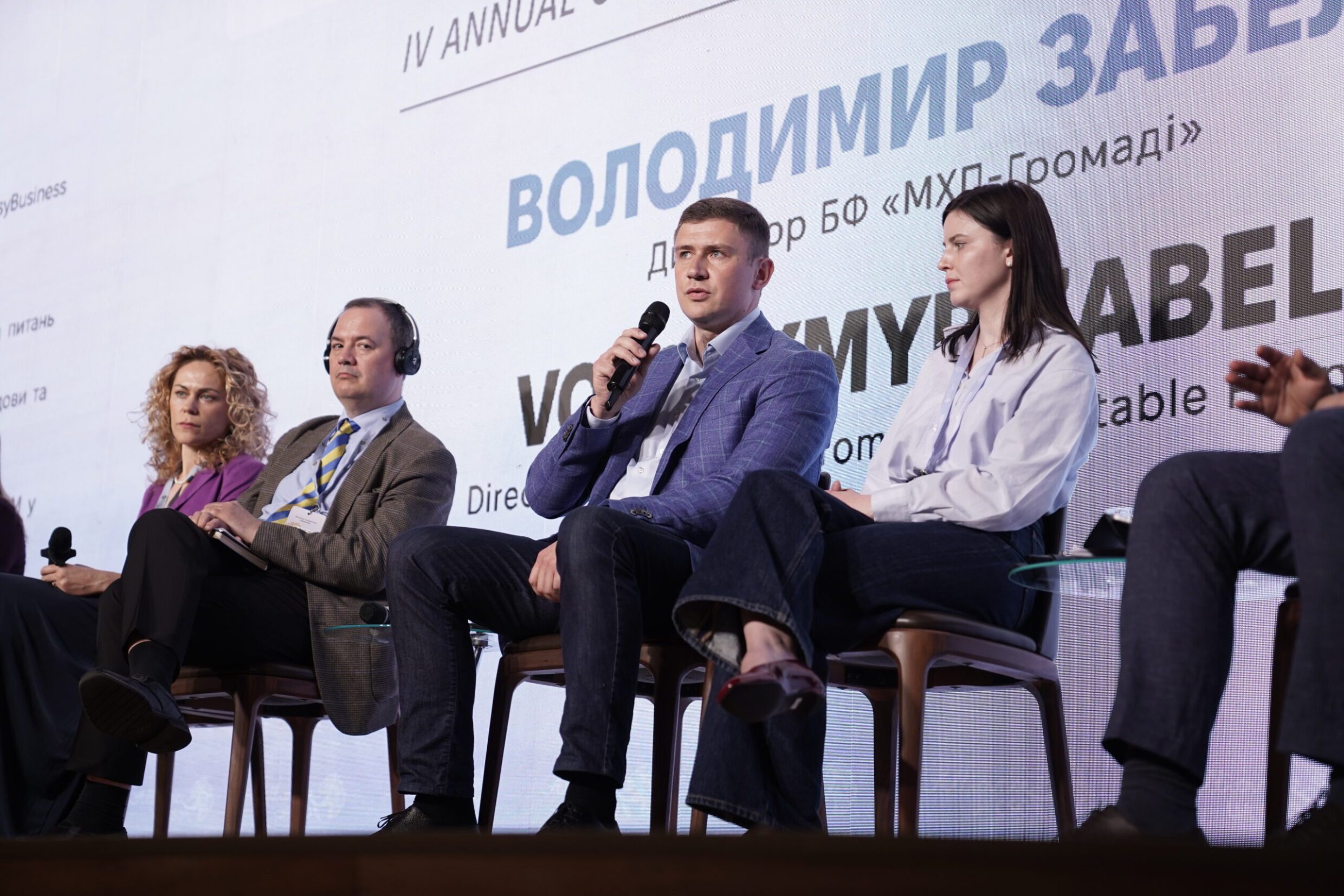
Volodymyr Zabela, Director of the “MHP-Community” charitable foundation, added that recovery must start with communities themselves, which need to become active participants in reconstruction rather than just aid recipients.
Also taking part were Olesia Volska-Zalutska (Mercy Corps Ukraine) and Oksana Plakhotniuk (GlobalGiving), who spoke about the transformation of international aid, the need to support local initiatives, and the gradual shift from humanitarian assistance to building communities’ economic capacity.
Ukraine’s successful recovery will require not just resources but a new culture of cooperation, long-term strategic vision, and systemic integration of civil society. The panel’s key conclusions, along with results of the civil-society study, will be presented and discussed at URC 2026 in Poland.