Development of Kosovo’s first Climate Change Adaptation Strategy
Client
UNDP KosovoClient Overview:
UNDP Kosovo is part of the United Nations Development Programme, one of the main international development organizations supporting Kosovo’s institutions, communities, and policy reform processes. In Kosovo, UNDP works across several development areas, including governance, environmental protection, climate action, social inclusion, economic development, resilience, and institutional strengthening.
Through this assignment, UNDP Kosovo supported the development of Kosovo’s first Climate Change Adaptation Strategy. This represents an important milestone because it will help Kosovo move from general climate awareness toward a more structured, coordinated, and institutionally owned approach to climate adaptation.
The strategy intends to help institutions better understand climate risks, define priorities, coordinate responsibilities, and prepare for the long-term impacts of climate change. It is also expected to support UNDP Kosovo’s broader role in advancing evidence-based policymaking, sustainable development, and climate resilience.
The Challenge:
Kosovo faces growing climate-related pressures affecting water resources, agriculture, energy, infrastructure, ecosystems, public health, and local community resilience. These risks include changing temperatures, rainfall variability, floods, droughts, and wider environmental pressures that can affect both national development priorities and local communities.
The client’s main objective was to support the development of Kosovo’s first Climate Change Adaptation Strategy. The strategy was needed to create a clear and practical framework for identifying climate-related risks, strengthening institutional preparedness, and defining adaptation priorities across relevant sectors.
This challenge was critical because climate adaptation requires long-term planning and coordinated action. Without a dedicated adaptation strategy, institutions may respond to climate risks in a fragmented way, with limited coordination between sectors and unclear prioritization of measures.
The strategy therefore needed to provide a common direction for future implementation, budgeting, donor coordination, and policy alignment. It also needed to help relevant institutions understand what needs to be done, who should be involved, and how adaptation measures can be prioritized. The client needed answers to several strategic questions:
- Which climate risks are most relevant for Kosovo’s development and public institutions?
- Which sectors and communities are most exposed or vulnerable to climate impacts?
- How should institutions coordinate responsibilities for climate adaptation?
- What priorities should guide future adaptation planning and implementation?
- How can the strategy support future financing, donor coordination, and policy alignment?
The assignment also involved several constraints. Time was one of the main challenges, as the strategy development process required consultation, analysis, coordination, drafting, and review within a limited implementation period. Another challenge was the availability and quality of data, as climate adaptation planning often depends on information from different sectors and institutions that may be incomplete, inconsistent, outdated, or difficult to compare. Stakeholder alignment was also important. Climate adaptation affects many institutions, and each institution may have its own priorities, expectations, and concerns. The process therefore required a diplomatic and structured approach to ensure that stakeholders felt included while keeping the strategy focused, realistic, and connected to implementation needs.
Our approach:
Civitta approached the assignment through a structured strategy development process combining policy analysis, technical research, stakeholder engagement, facilitation, and strategic drafting.
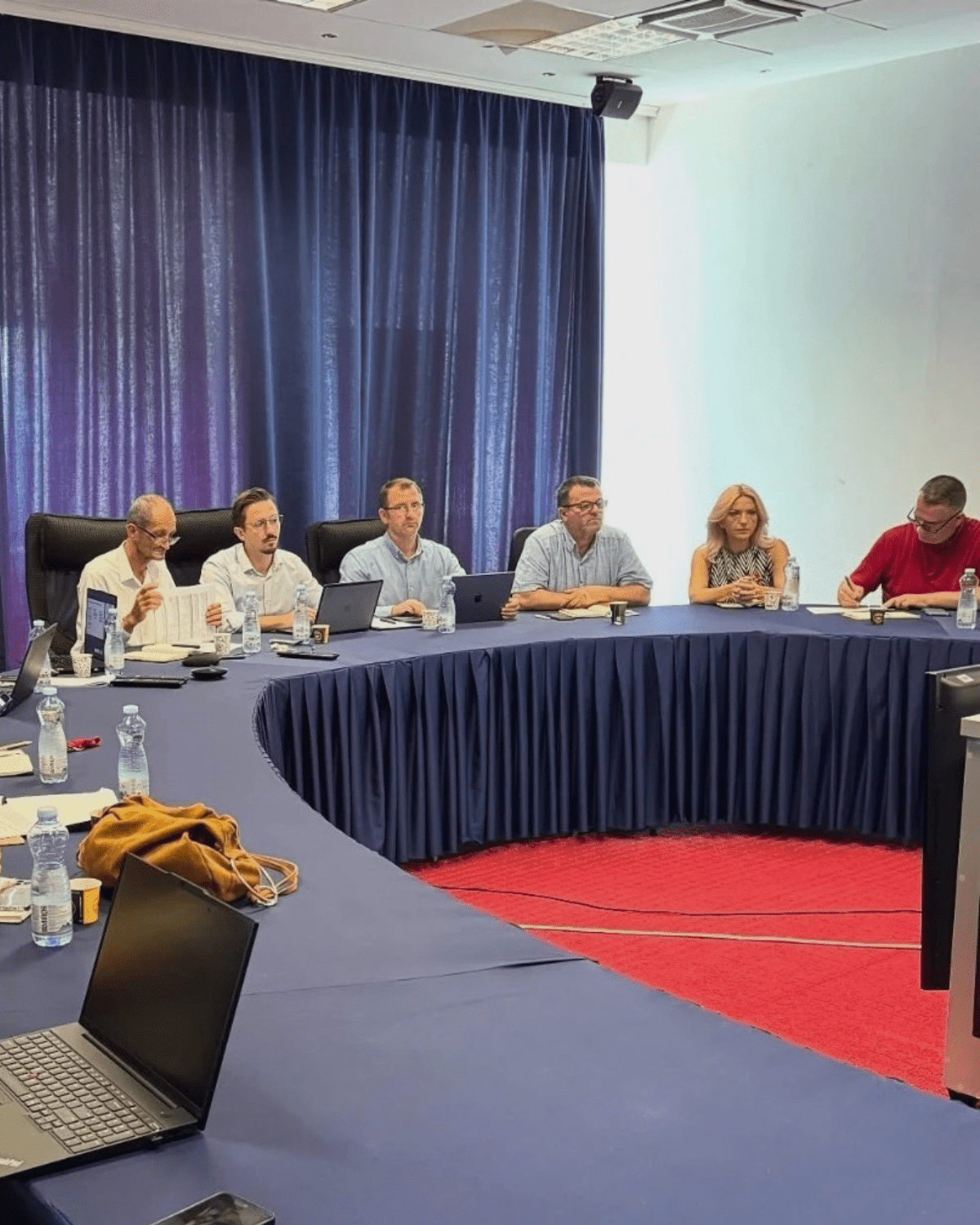
The work initially focused on the establishment of the Working Group for the Kosovo Climate Change Adaptation Strategy. The Working Group brought together relevant stakeholders and institutions to ensure that the strategy development process would be inclusive, participatory, and institutionally coordinated.
Following this, the work continued with a desk review of Kosovo’s policy and institutional landscape. This included relevant national strategies, climate-related documents, sectoral policies, institutional responsibilities, and available data. The purpose was to identify existing priorities, gaps, and areas where the Climate Change Adaptation Strategy could add value.
Civitta also supported the organization of the strategy development process through working group coordination and stakeholder engagement. This was important because the strategy required input from multiple institutions and sectors. The team helped structure discussions, gather feedback, and translate stakeholder input into strategic priorities. The drafting process focused on building a clear strategic framework. This included defining the logic of the strategy, organizing priorities, identifying key adaptation areas, and ensuring that the document remained understandable and usable for decision-makers.
Key elements of Civitta’s approach included:
- Stakeholder mapping: The team mapped key institutions, development partners, experts, and other actors relevant to climate adaptation. This helped ensure that the process included the right stakeholders and that engagement was structured around the institutions most relevant to future implementation.
- Working group coordination: The KCCAS Working Group provided a platform for discussion, validation, and institutional input. Civitta supported the flow of inputs and helped ensure that comments were reflected in a structured way.
- Desk research and policy review: Civitta reviewed existing documents, institutional mandates, sectoral priorities, and relevant policy frameworks. This helped the team understand the current policy environment and identify where the new strategy should fit.
- Consultation and facilitation: Consultation and facilitation were used throughout the process to gather views, clarify expectations, and manage different perspectives. Consultations were conducted both individually with relevant stakeholders and during Working Group meetings, ensuring that inputs were collected through different formats. Since climate adaptation is cross-sectoral, facilitation was essential to keep discussions focused, inclusive, and productive.
- Evidence-based analysis: Where data was available, it informed the identification of climate risks, sectoral vulnerabilities, and adaptation priorities. Where data was limited, Civitta relied on careful interpretation, policy review, and stakeholder validation.
- Strategic framework development: Civitta helped translate the analysis into a coherent strategy structure organized around objectives, priorities, actions, and implementation considerations. This helped ensure that the strategy was practical and policy-relevant.
- Communication planning: Communication planning was also part of the approach. Since climate adaptation requires awareness and coordination, the process included consideration of how the strategy and its priorities could be communicated to stakeholders and the wider institutional environment.
A distinctive feature of Civitta’s approach was its ability to translate a complex, cross-sectoral climate adaptation process into a structured and practical strategy development exercise. The work focused on keeping the strategy clear, policy-relevant, and connected to institutional responsibilities, while also ensuring that stakeholder inputs were organized in a way that supported ownership without making the document overly broad or unrealistic.
Results & Impact:
The project contributed to the development of Kosovo’s first Climate Change Adaptation Strategy, creating an important foundation for future climate adaptation planning, institutional coordination, donor programming, and implementation of adaptation measures. The main outputs included support to the establishment and engagement of the KCCAS Working Group, preparation of the strategic framework, development of the communication plan, submission of the draft Climate Change Adaptation Strategy, incorporation of comments from UNDP and the working group, and preparation of final reporting and documentation.
- Structured stakeholder engagement: The project created a structured process for stakeholder input and validation. This was important because climate adaptation strategies require coordination across sectors and institutions. Through the working group process, the project helped build a stronger basis for institutional discussion and future implementation.
- Improved climate governance: The project contributed to strengthening the foundations for climate governance in Kosovo by supporting a more coordinated and structured approach to climate adaptation. It helped position adaptation as a cross-sectoral issue and provided a basis for institutions to discuss climate risks, priorities, and responsibilities in a more systematic way.
- Strengthened institutional coordination: By involving relevant stakeholders and organizing their input through a working group process, the project helped build shared understanding around climate adaptation priorities. This supported stronger coordination between institutions and helped create a sense of ownership around the strategy.
- Stronger strategic planning capacity: The project helped translate a complex and long-term issue into a structured document that can guide future decision-making. This is especially valuable in climate adaptation, where responsibilities are shared across institutions and implementation requires long-term commitment.
- Foundation for future financing and donor support: The strategy can help institutions and development partners identify priority areas, align support, and design future interventions more effectively. It provides a clearer basis for future investment planning, donor coordination, and policy development.
- Long-term impact: The long-term impact of the project is the creation of a strategic foundation for climate adaptation planning in Kosovo. For UNDP Kosovo, the project strengthens its role as a key partner in climate action and sustainable development. For Kosovo’s institutions, the strategy can serve as a reference document for identifying climate risks, prioritizing adaptation actions, and coordinating responsibilities across sectors.
Key Takeaways:
The project showed that climate adaptation strategies require both technical analysis and strong institutional coordination. A strategy cannot be developed only through desk research; it also needs stakeholder input, validation, and ownership.
A second key lesson was that data limitations are common in climate policy work, especially when information is spread across different institutions and sectors. These limitations can be managed through a structured approach that combines available evidence, policy review, expert judgment, and stakeholder consultations.
A third key lesson was the importance of managing expectations diplomatically. In cross-sector strategies, many stakeholders may want their priorities reflected. A successful process requires listening to different perspectives while keeping the final document focused and realistic.
The project also showed that strategy development should be connected to implementation from the beginning. The document needs to be clear, practical, and aligned with institutional responsibilities so that it can support real action after approval.
Civitta’s expertise made a difference by combining public policy expertise, strategic planning experience, analytical capacity, and stakeholder facilitation. The team helped structure a complex topic into a clear strategy development process and supported UNDP Kosovo in moving from broad climate adaptation objectives toward practical strategic outputs.
Civitta’s experience with public sector clients and international development organizations helped ensure that the process was professional, organized, and aligned with donor expectations. The team also helped manage complexity by organizing multiple sectors, uncertain data, stakeholder expectations, and long-term climate risks into a coherent process and document structure.
The approach is relevant for other public institutions, international organizations, donors, and development partners working on climate policy, environmental governance, resilience planning, sustainable development, disaster risk reduction, green transition planning, circular economy, local development strategies, social inclusion strategies, and institutional reform.