Utvonalterv.hu: modernising Hungary’s first route planner
Client
Utvonalterv.hu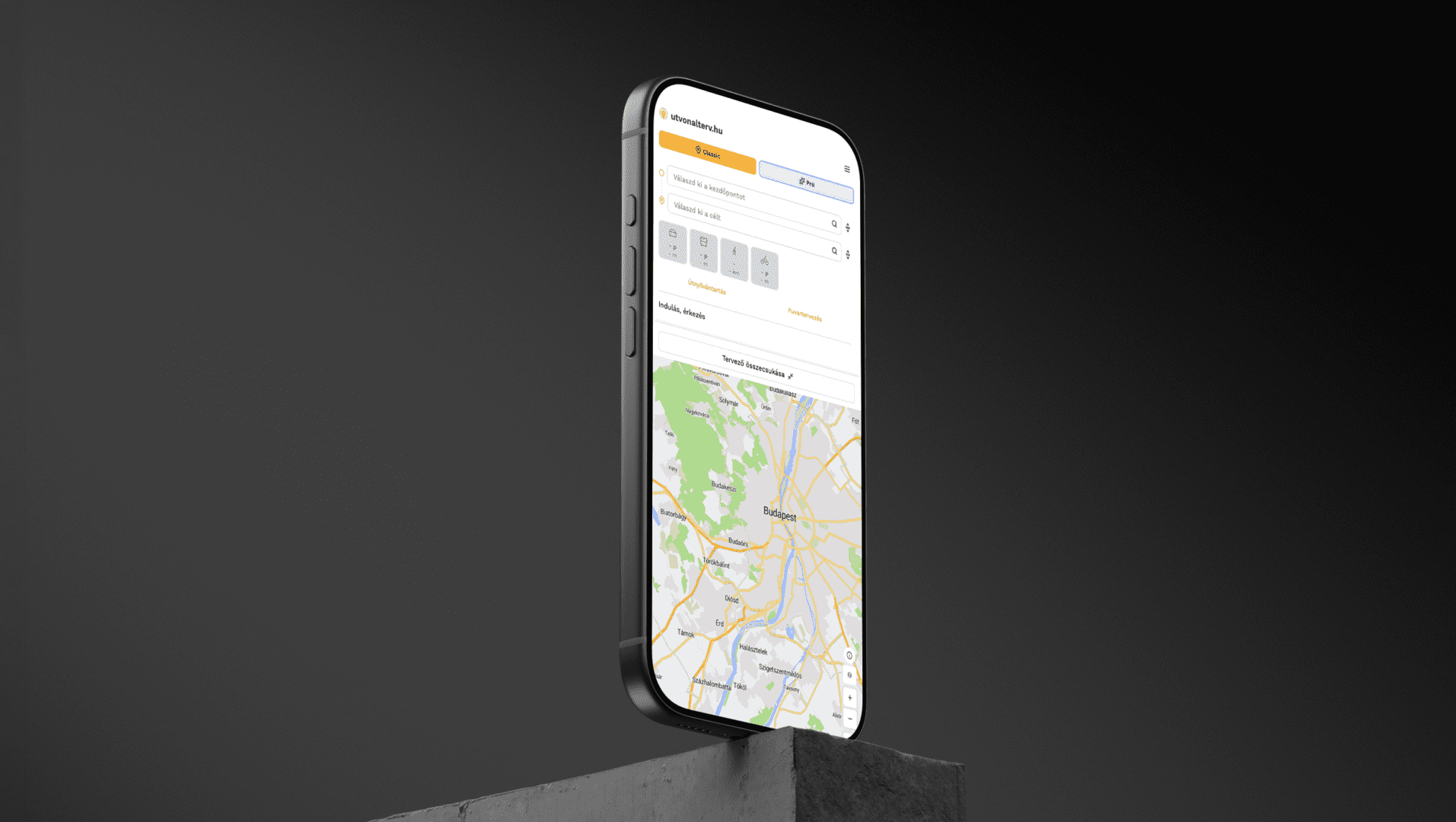
Client Overview:
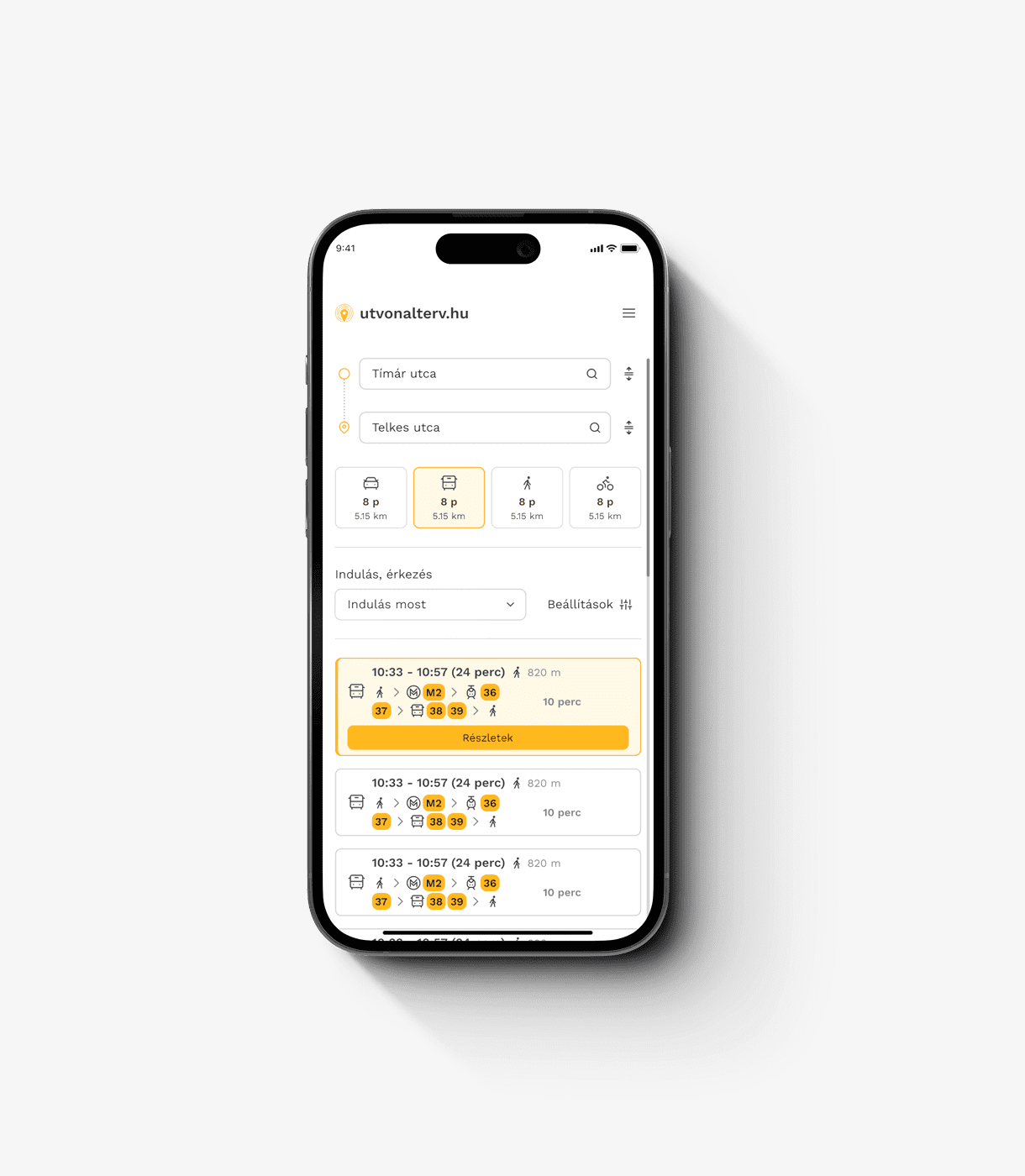
Utvonalterv.hu is Hungary’s original route planning platform, built to serve both everyday commuters and professional logistics teams. Covering every mode of transport, the platform combines seamless daily navigation with powerful B2B capabilities – enabling logistics teams to plan multi-stop deliveries, optimise dispatch rounds, and reduce operational costs, all within a single, Hungary-specific tool.
The Challenge:
Utvonalterv.hu had earned a loyal user base long before global navigation giants entered the market – a testament to how well it served local needs. But years of steady use had left the platform visually and technically behind modern expectations. The core challenge was a classic one in software development: how to modernise a legacy application without alienating the users who had relied on it for years, while also integrating third-party APIs for maps, invoicing, and payments into a coherent, scalable architecture.
Our Approach:
Civitta approached the redesign in four deliberate phases, each building on the last to deliver a product that felt new without losing what made it familiar.
- Phase I. Refresh
The process began with a visual update – new colours, typography, and iconography that brought the interface in line with contemporary design standards.
- Phase II. Adapt
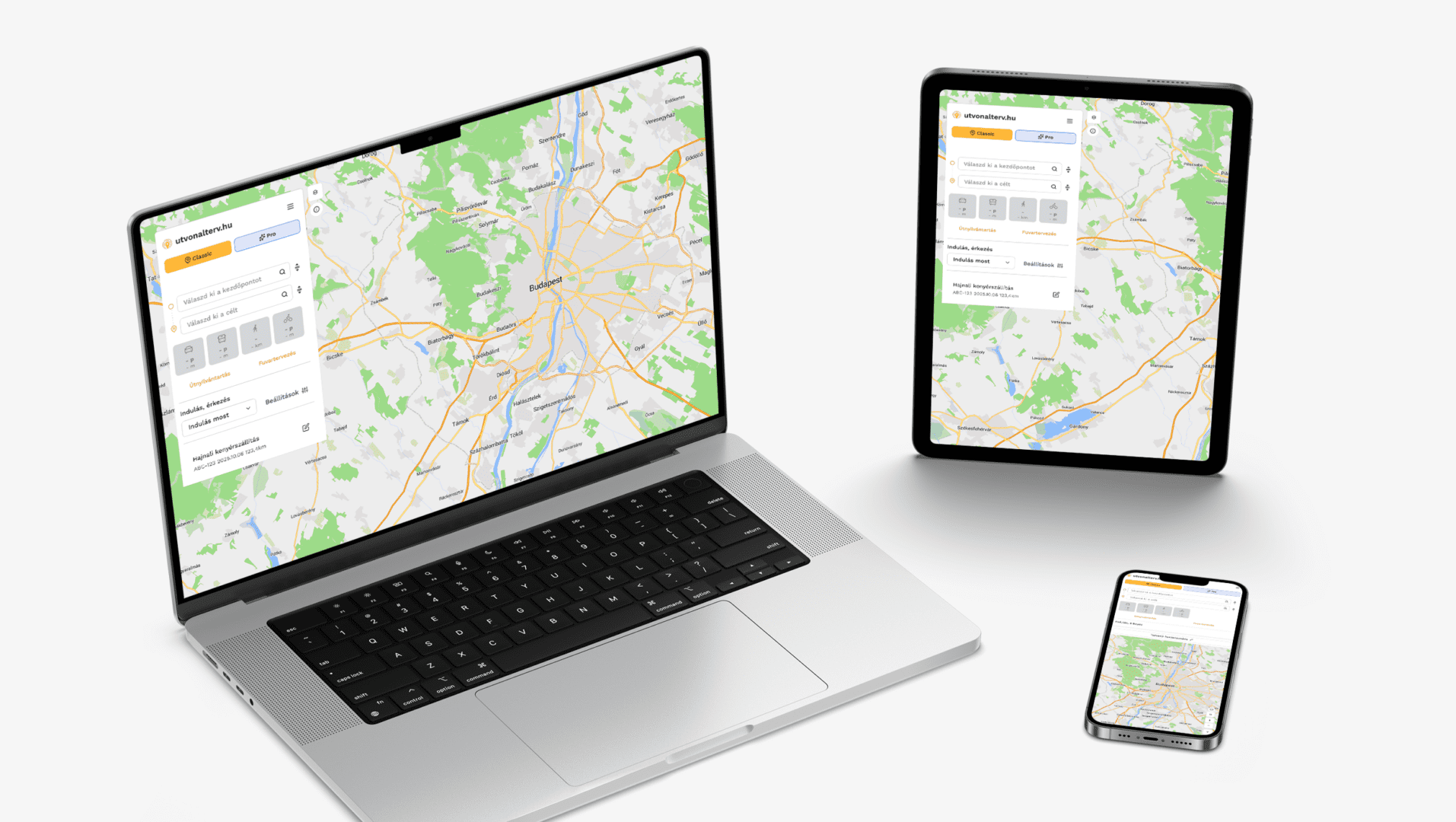
Responsive design was treated not as a nice-to-have, but as a functional requirement. Core workflows were preserved while the layout was re-engineered to reflow gracefully across screen sizes – directly supporting the platform’s goal of serving users on the move.
- Phase III. Rework
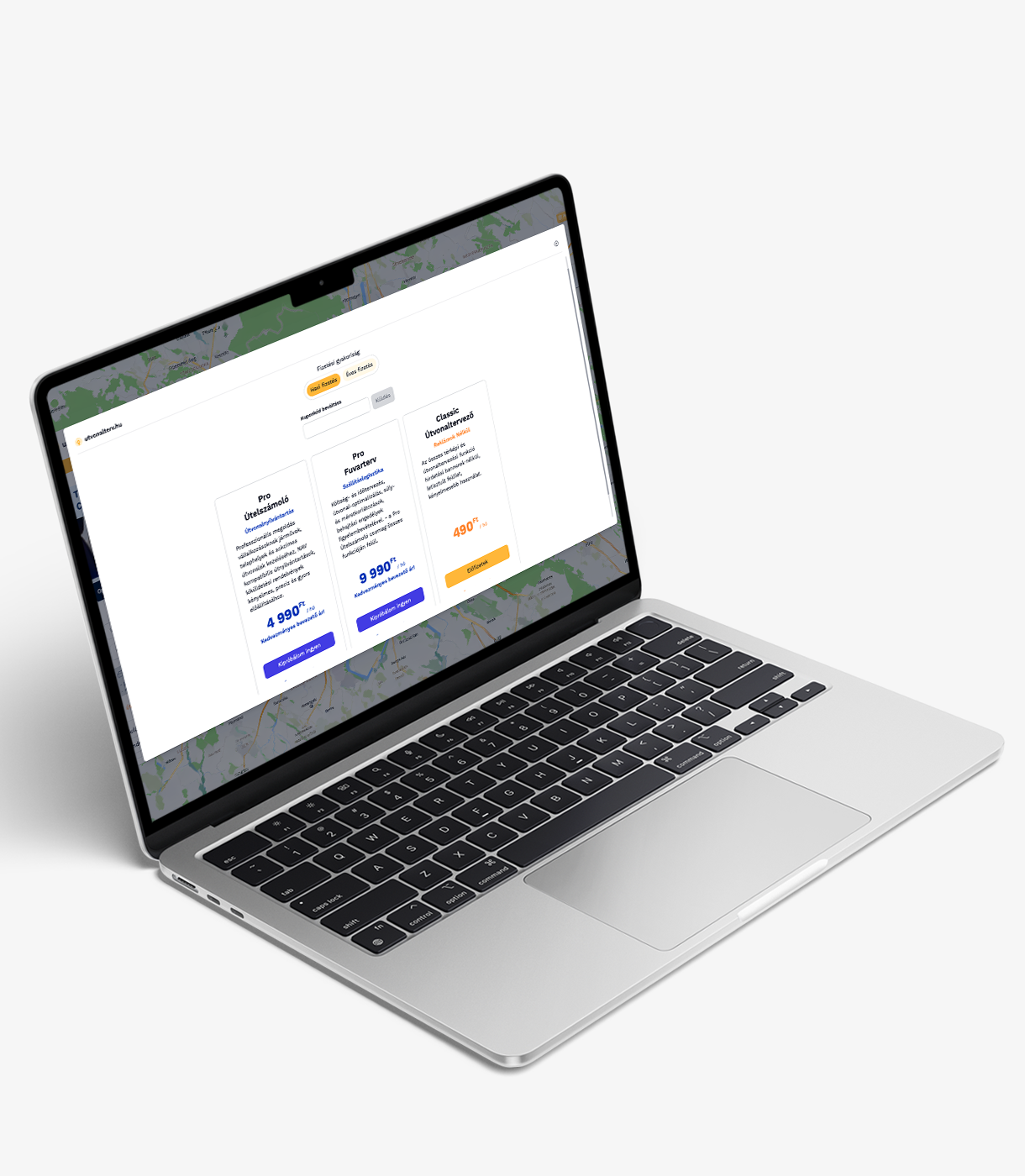
The most substantial phase involved a fundamental rethinking of the product’s structure. Workflow steps were consolidated, new features were introduced, and a dedicated space was created for professional users managing advanced logistics challenges. On the technical side, the frontend was rebuilt with React, TypeScript, and shadcn/ui, while the backend was redeveloped using Nest.js with Prisma. Third-party integrations for maps, invoicing, and payments were connected throughout. A Scrum team of four developers, led by a Scrum Master and working with the client as Product Owner, kept delivery agile and communication continuous.
- Phase VI. Refine
A full design system was established – codifying rules for colour, typography, spacing, and UI components – to ensure visual coherence across every touchpoint and accelerate future design and development work.
Results & Impact:
Civitta delivered a fully modernised route planning platform across web and mobile web, serving both individual users and professional logistics teams. The redesign preserved what loyal users valued while meeting the expectations of a broader, more demanding audience. The introduction of a structured design system laid the groundwork for consistent, efficient product evolution well beyond the initial delivery.
Key Takeaways:
1. Modernisation requires a phased strategy, not a wholesale replacement: By sequencing the work – refresh, adapt, rework, refine – the team managed risk carefully, introducing change incrementally rather than disrupting a product users already depended on.
2. B2B and B2C in one product demands clear feature separation: Serving both everyday commuters and professional logistics teams within a single platform required dedicated spaces and flows for each audience, ensuring that neither use case diluted the other.
A design system turns delivery into a long-term investment: The design system established during this project isn’t just a consistency tool – it’s the foundation that makes every future iteration faster, cheaper, and more coherent.