AI-powered nutrition app for TriumHealth
Client
TriumHealth PTE LTD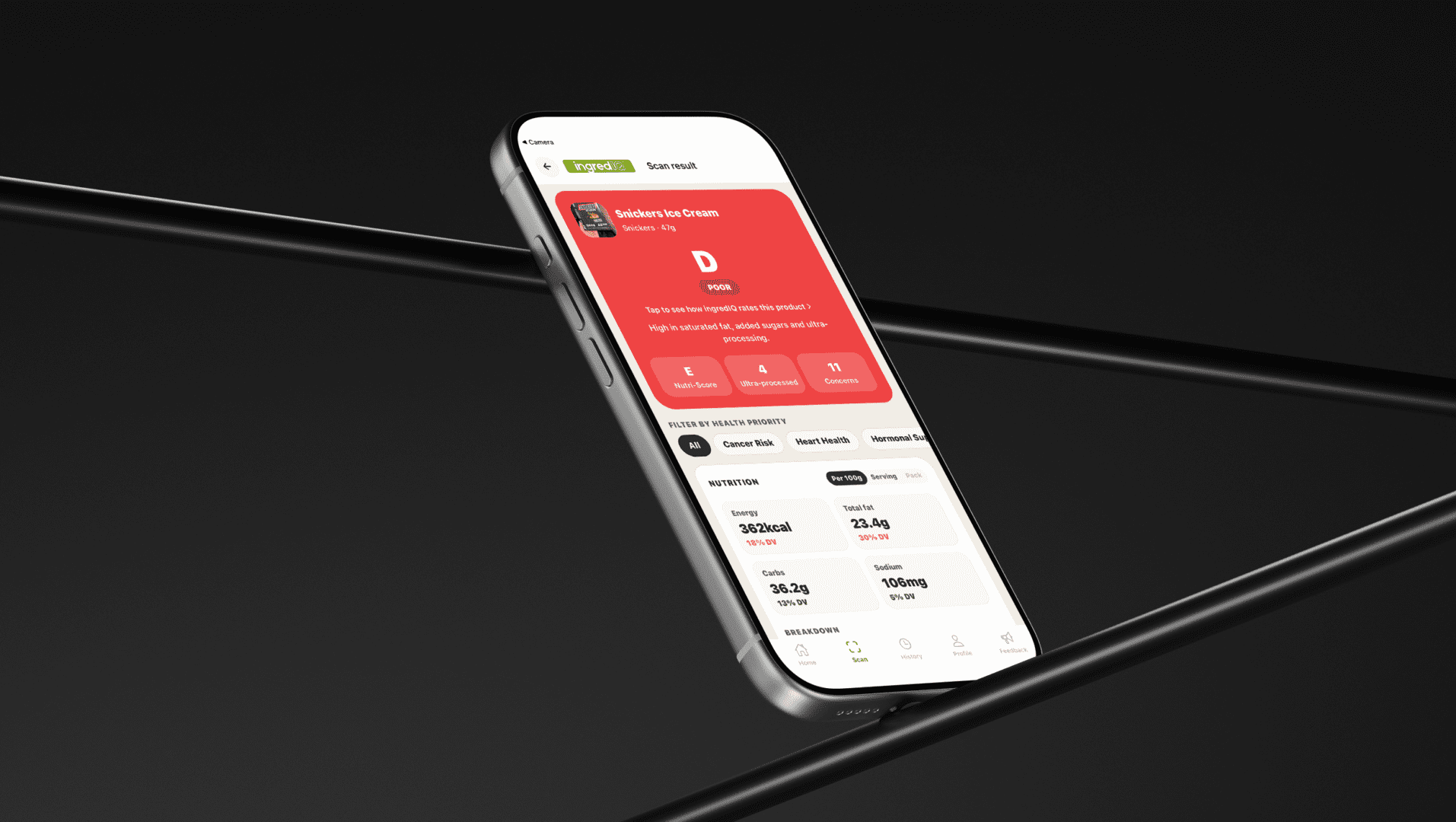
Client Overview:
Our client was TriumHealth PTE LTD – an early-stage Singapore-incorporated startup building an AI-powered personal nutrition and food safety tool for the consumer market. TriumHealth is pursuing a science-backed approach to ingredient transparency, entering a market where demand for clean-label products and nutritional awareness is rapidly accelerating.
The Challenge:
TriumHealth needed a fully functional, production-ready mobile application – available simultaneously on iOS and Android – built from scratch, within an extremely constrained budget and a two-week delivery window.
The stakes were straightforward: without a working MVP, there was no user feedback, no validated product assumptions, and no credible path to the next investment round. Every week of delay extended that loop.
Key constraints:
– A highly constrained budget – a fraction of what a conventional mobile agency would require for equivalent scope
– A two-week hard deadline for a shippable, production-ready build
– Full cross-platform delivery (iOS and Android) required simultaneously
– A live, stable backend needed from day one – not a prototype
Our Approach:
Civitta adopted an AI-driven development methodology as the cornerstone of this engagement – the only approach that made delivery at this budget and timeline realistically achievable.
- AI-Augmented Development Workflow
The entire development cycle was structured around AI coding tools (Cursor with Claude). Rather than supplementing a conventional team, AI was used as the primary productivity multiplier – enabling a single developer to operate at the effective output of a full team. Prompts were engineered to describe intended behaviour and logic, with AI handling code generation, debugging, and iteration. Without this approach, a comparable scope would conservatively have required three to four developers over two to three months, at a cost ten to fifteen times higher.
- Technology Stack
– Expo / React Native (SDK 54): Chosen for true cross-platform delivery from a single codebase, eliminating the cost of parallel iOS and Android development tracks
– Supabase backend: Deployed as a fully managed backend-as-a-service covering authentication, database, and row-level security – removing the need for a dedicated backend engineer entirely
– OpenFoodFacts API: Leveraged as a free, open-source ingredient and nutritional data source, avoiding costly proprietary data licensing
- Science-Backed Scoring Engine
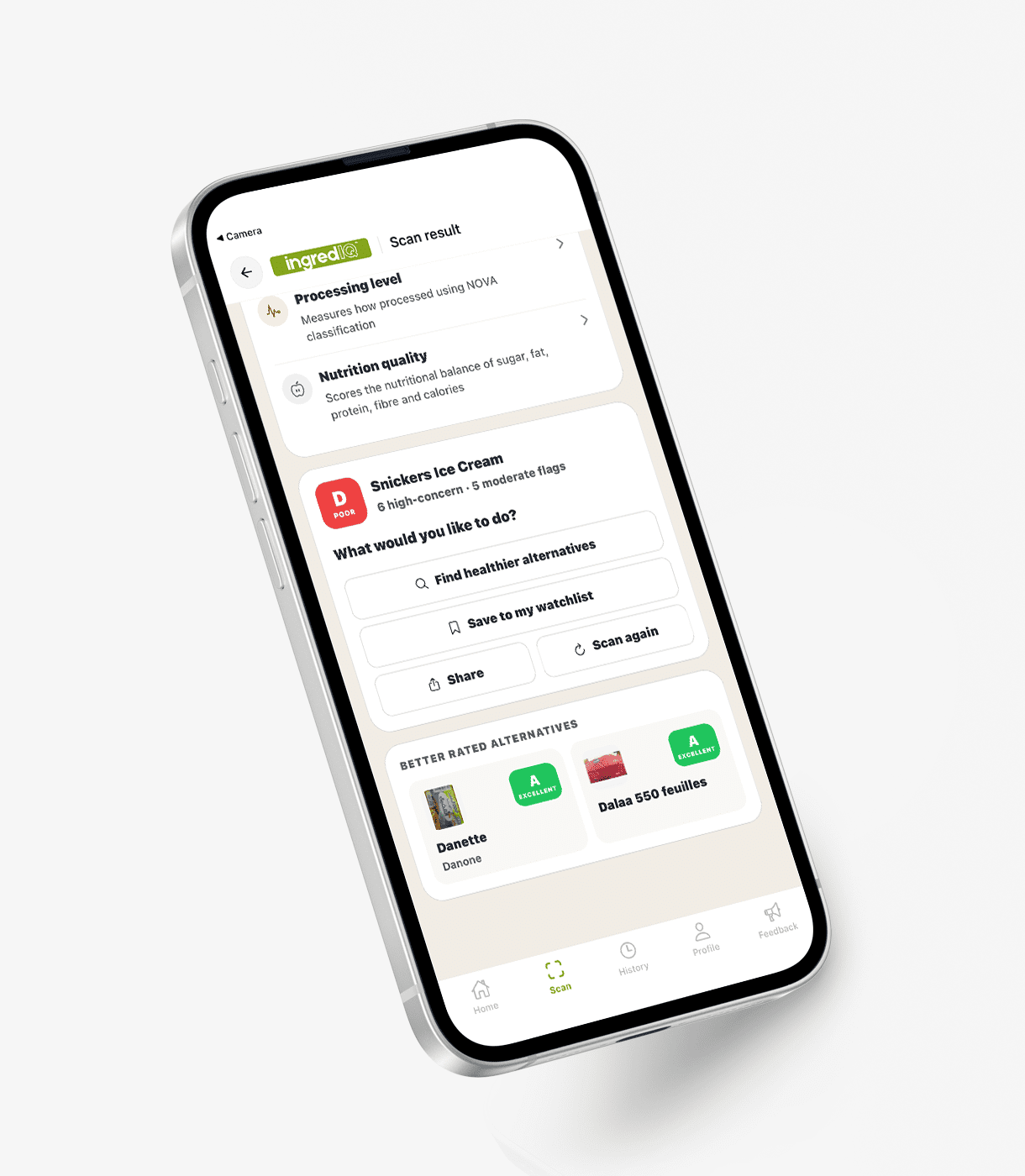
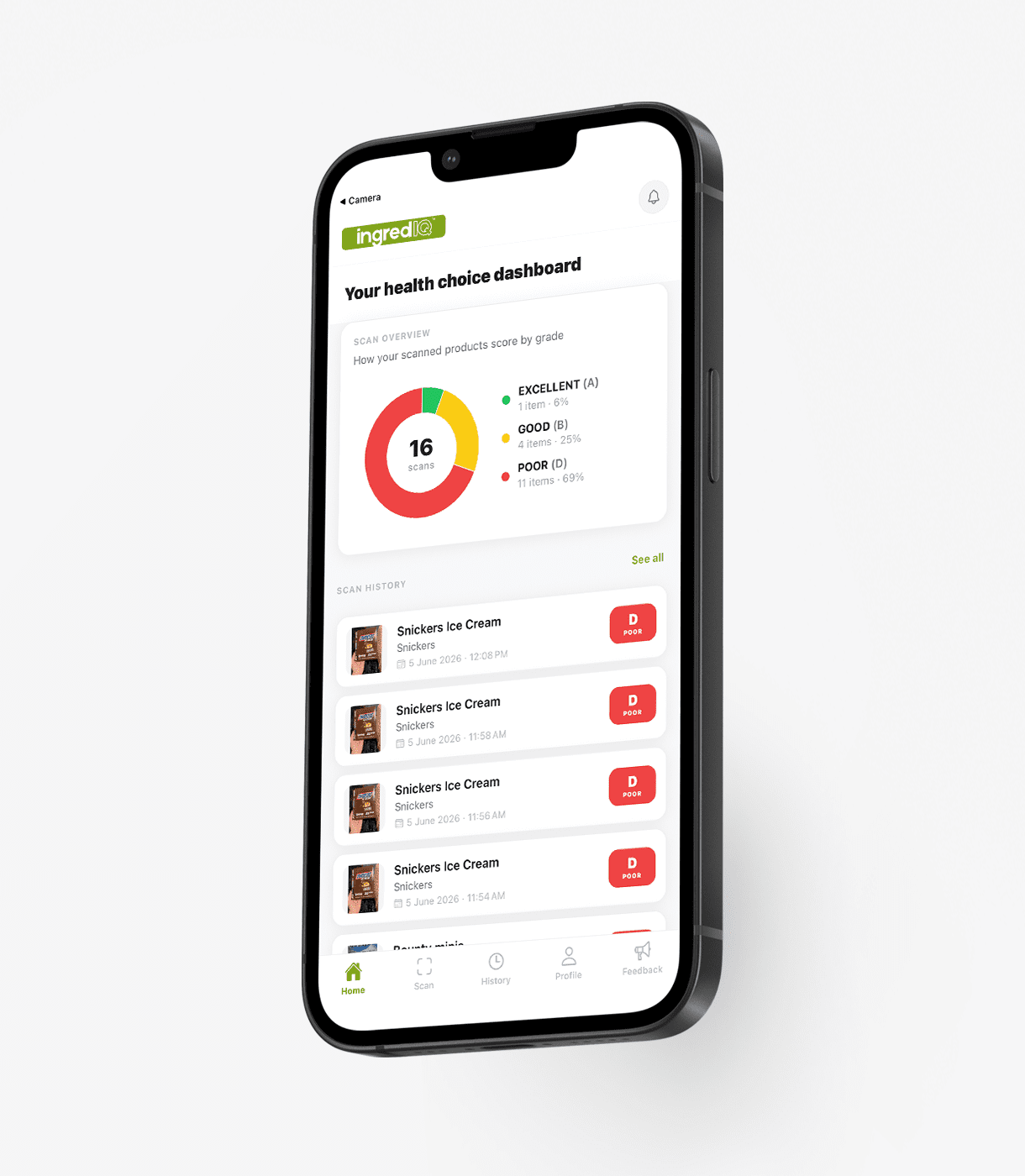
A custom ingredient grading algorithm (A-D) was built incorporating NOVA food processing classifications, ingredient safety tiers sourced from EFSA, WHO/IARC, FDA, and PubMed, and personalised health priority weighting – delivering genuine scientific credibility within the budget envelope.
- Iterative Delivery
Features were scoped, built, and reviewed in rapid cycles directly with the client, ensuring every development hour mapped to validated product priorities.
Results & Impact:
Quantifiable outcomes:
- Full MVP delivered across iOS and Android in 2 weeks
- Production-ready Supabase backend live from launch
- App submitted and prepared for App Store and Google Play distribution via Expo EAS
- Analytics (Mixpanel) and user feedback (Tally) instrumentation built in from day one
TriumHealth moved directly from zero to a production-grade, testable product – enabling real user feedback collection immediately after delivery. The science-backed scoring engine gave the app meaningful differentiation versus generic nutrition tools, while the clean, scalable architecture ensures the MVP can grow without a costly rebuild.
TriumHealth now holds a working, investable asset – a direct vehicle for fundraising conversations, user acquisition, and iterative product development that would have taken significantly longer and cost significantly more through a conventional development route.
Key Takeaways:
1. AI-driven development is a genuine equaliser for early-stage startups: With the right workflow, a constrained budget is no longer a barrier to a polished, production-grade product. Civitta’s ability to structure and lead AI-augmented development is a distinct and replicable capability.
2. Architecture choices compound over time: Selecting Expo, Supabase, and open-source data sources was not just a cost decision – it was a strategic one that leaves the client with a scalable, maintainable foundation.
3. Speed to feedback is the primary success metric at MVP stage: The two-week delivery unlocked the feedback loop that every early-stage product depends on. This engagement was designed around that outcome, not around feature completeness.
4. The approach is broadly transferable: Any early-stage client needing rapid digital product validation – across health tech, fintech, edtech, or any consumer-facing vertical – where budget constraints would otherwise prevent a professional-grade build is a natural fit for this methodology.