ExtraVision: €500K in EIC funding for a Ukrainian MedTech startup
Client
ExtraVisionClient Overview:
Artificial intelligence and extended reality are rapidly reshaping healthcare. However, bringing deep-tech medical innovations into clinical practice requires much more than a promising technology. Companies must validate their solutions, prepare for regulatory requirements, and demonstrate a clear commercial pathway before they can scale.
ExtraVision’s journey shows how the right funding strategy helped bridge the gap between an innovative prototype and a market-ready medical technology.
Neurosurgery remains one of the most demanding medical specialties, where every millimetre matters. Yet surgeons still largely rely on 2D CT and MRI scans, mentally reconstructing complex anatomy before entering the operating room.
ExtraVision was founded to change this reality.
The Ukrainian deep-tech startup develops an AI- and AR-powered platform for neurosurgical planning and intraoperative decision-making. Founded by practising clinicians, including neurosurgeons and a cardiologist, the company emerged directly from real clinical needs.
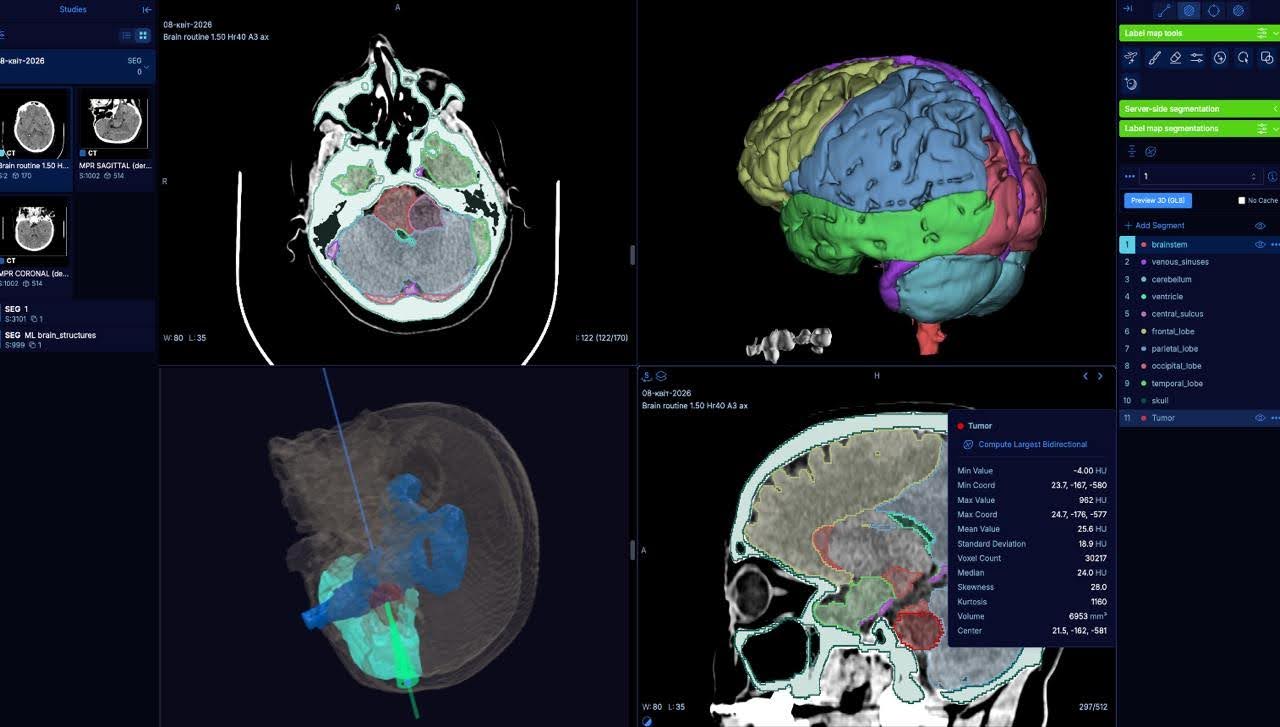
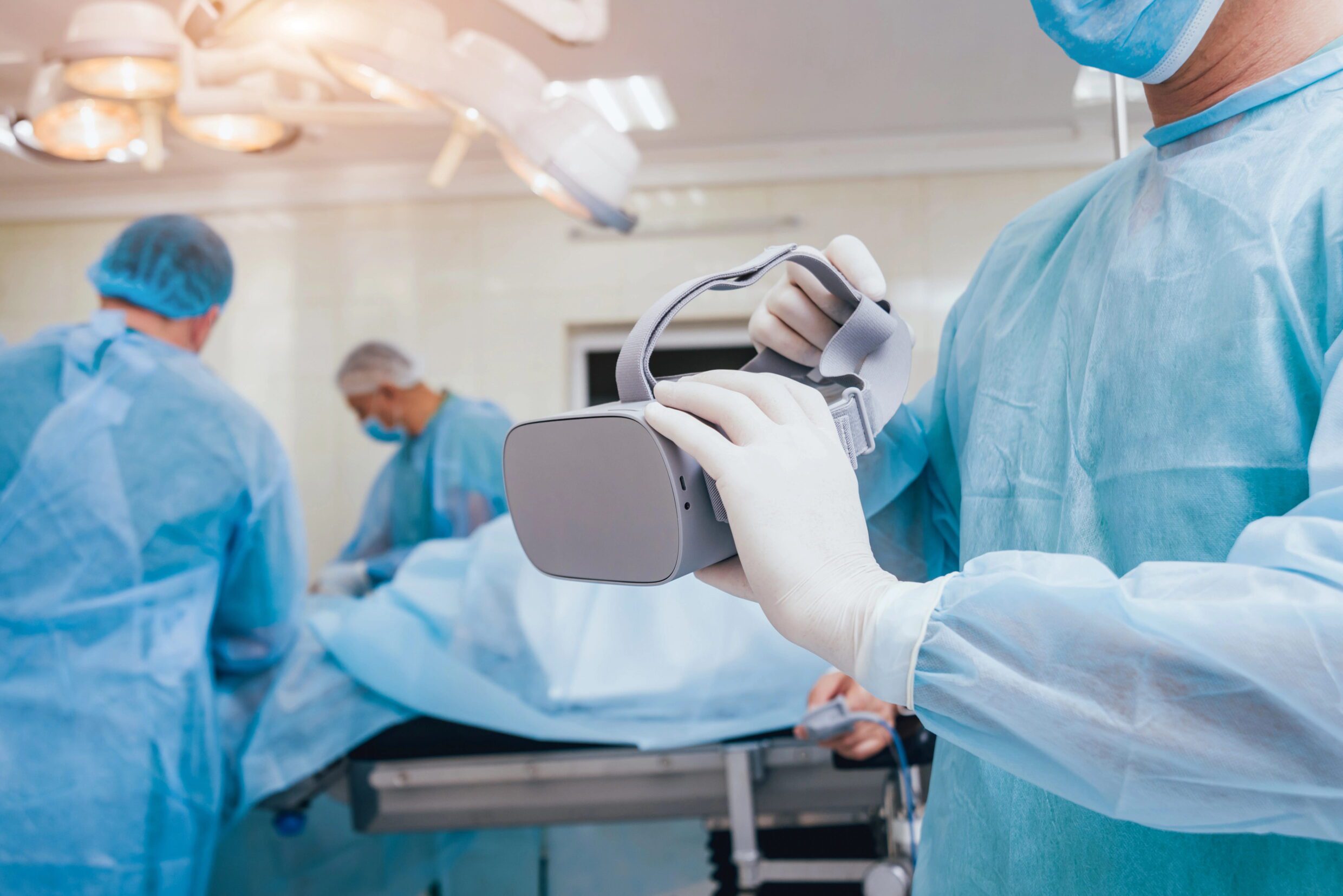
Its solution combines machine-learning-driven medical image segmentation with augmented reality, transforming standard CT and MRI scans into a patient-specific 3D anatomical model the surgeon can rotate, inspect, and carry into the operating room through an AR headset. Surgeons can explore these models during pre-operative planning, use them to support orientation during procedures, and apply them in medical education and patient communication.
Unlike conventional neuronavigation systems that require costly specialised infrastructure, ExtraVision is designed to run on commercial AR headsets and standard computers, making advanced surgical planning significantly more accessible.
The technology has already been validated in more than 200 surgical procedures and is used in collaboration with leading Ukrainian medical institutions, including the Romodanov Neurosurgery Institute, the National Cancer Institute, Feofaniya Clinical Hospital, and Kharkiv Regional Clinical Hospital.
The company has also received strong recognition within the innovation ecosystem, winning IT Arena 2024 and the WHO Health Hackathon, securing Seeds of Bravery funding, representing Ukraine at CES 2025, and receiving the Best University-Based Startup in Ukraine award from the Innovation Development Fund.
The Challenge:
ExtraVision achieved this progress with limited resources, relying primarily on founder funding, grants, and competition awards.
However, the next stage of development required a different level of financing and project structuring. The company needed to move beyond its initial AR-based prototype and develop an integrated platform featuring automated AI segmentation, advanced annotation and correction tools, clinical validation, and preparation for regulatory and commercial deployment.
For an early-stage MedTech company, this created a significant funding gap. Private investors expected additional clinical evidence and regulatory progress, while smaller grant programmes could not finance the scale of development required.
The EIC Support for Ukrainian Tech SMEs and Startups programme offered the right instrument at the right stage: substantial non-dilutive funding that could help ExtraVision advance its technology toward a market-ready solution without placing immediate pressure on the company to meet short-term investor expectations.
At this stage, ExtraVision partnered with Civitta to prepare a competitive EIC application.
Our Approach:
Civitta’s work started with a deep dive into the technology, clinical workflow, development priorities, validation strategy, and long-term commercial ambitions.
Because ExtraVision operates at the intersection of neurosurgery, artificial intelligence, augmented reality, and medical-device regulation, the challenge was not only to explain the technology but to demonstrate its market potential and implementation strategy.
Beyond proposal writing, Civitta supported ExtraVision in structuring the project work plan, validation activities, regulatory pathway, commercialisation strategy, intellectual property approach, implementation timeline, and budget.
The application process, therefore, became more than a funding exercise. It gave ExtraVision an external strategic perspective and helped the founders sharpen their assumptions, prioritise development activities, and build a clearer roadmap for the company’s next stage of growth.
Results & Impact
With Civitta’s support, ExtraVision secured approximately €500,000 in non-dilutive funding under the EIC Support for Ukrainian Tech SMEs and Startups programme.
The grant enables the company to accelerate development of its AI- and AR-powered surgical intelligence platform, moving from a validated prototype toward a clinically mature solution.
The project includes optimisation of AI segmentation, development of an integrated AR platform, multi-centre clinical validation involving at least 100 neurosurgical procedures, and preparation for regulatory compliance, commercialisation, intellectual property protection, and future investment.
For surgeons, the technology is designed to reduce reliance on the mental reconstruction of 2D scans, improve spatial understanding, and support more informed surgical pathway planning.
For hospitals, it provides a more affordable alternative to traditional neuronavigation systems, expanding access to advanced surgical planning technologies.
More broadly, the project strengthens Ukraine’s MedTech ecosystem while contributing to the adoption of AI and XR technologies across European healthcare.
Testimonials:
“Working with the Civitta team throughout the EIC application process was a highly valuable experience. Their expertise helped us translate a complex medical technology and ambitious product vision into a clear, structured, and compelling EIC proposal. We particularly valued their understanding of the EIC evaluation framework, guidance on positioning our innovation and market potential, and their critical feedback throughout the preparation and submission process. The team also helped us maintain a strong balance between the technological, clinical, and commercialization aspects of the application.
EIC funding will enable us to accelerate the transition of eXtra Vision from a validated clinical solution toward a scalable European medical technology platform. The funding will support further development and clinical validation of our AI-powered surgical planning and decision-support tools, including automated medical-image segmentation, 3D reconstruction, AI-assisted clinical decision support, and mixed-reality visualization.
It will also support integration with hospital infrastructure, including PACS and medical information systems, as well as the regulatory and cybersecurity activities required for broader European deployment. Ultimately, EIC support will allow us to expand clinical validation, establish new pilot implementations with European hospitals, and prepare the platform for commercialization and international scale-up.”

Vladyslav Kaliuzhka
Key takeaways:
ExtraVision’s experience highlights several important lessons for deep-tech companies seeking European innovation funding.
- Technology alone is not enough. Innovative solutions must also present a clear market opportunity, implementation plan, and commercialisation strategy.
- Proposal development is strategic planning. Building the work plan, budget, validation pathway, and commercial model helped ExtraVision clarify its own priorities and resource requirements.
- Choosing the right funding instrument matters. Non-dilutive funding enabled ExtraVision to advance its technology without immediate pressure from private investors.
- The same approach applies beyond MedTech. Many deep-tech startups face the challenge of translating complex innovation into a compelling case for European funding.
With the right strategy and preparation, EU funding can become a catalyst for turning innovative technologies into market-ready solutions.