Visa She’s Next – Baltic & Nordic Grant Programme
Client
VISA Inc.Client Overview:
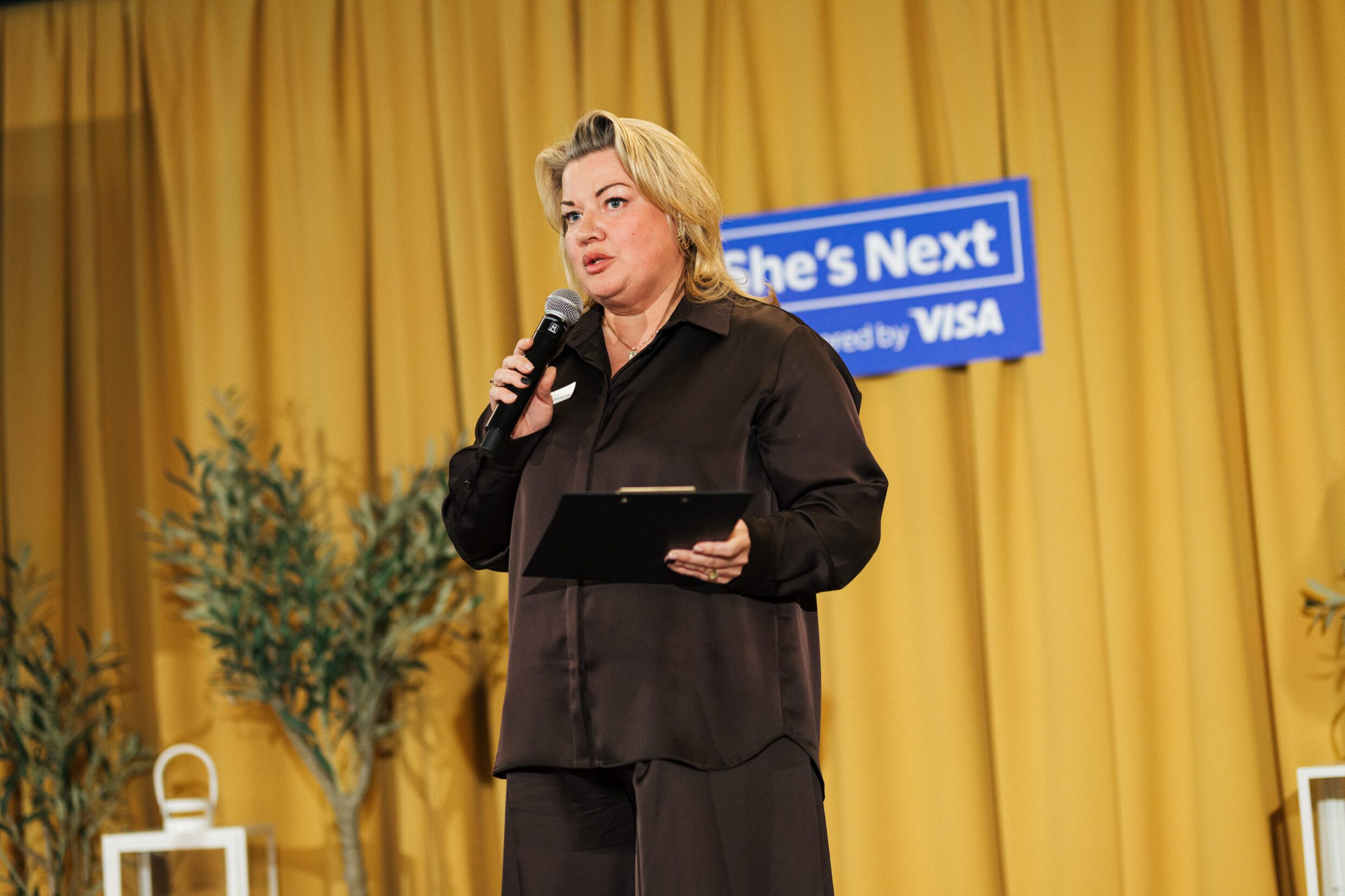
Helve (part of the Civitta Group since March 2026) was appointed as the Baltic & Nordic regional delivery partner for the Visa She’s Next Grant Programme, responsible for managing the full application cycle, finalist selection, pitch preparation and grant distribution across four markets – Latvia, Lithuania, Estonia and Finland.

The Challenge:
Women entrepreneurs across the Baltic and Nordic markets face a shared set of structural barriers to early-stage business growth. Across all four markets, the number one challenge reported by applicants was trouble attracting funding, followed by personal branding, access to mentors, lack of staff, and building a digital presence.
In Lithuania, feeling isolated ranked among the top five challenges – highlighting the additional isolation faced by solo founders in smaller markets.
The typical applying company is small and early-stage: the majority of applicants had 0-5 employees, and companies aged 1-2 years made up the largest share of the applicant pool.
Finland stood out with a particularly high share of 0-employee companies (84 out of 238 applicants), reflecting the prevalence of self-employed founders in that market.
Helve needed to build a high-volume, cross-border application pipeline that attracted genuinely impactful businesses – not just the most digitally active ones – while ensuring finalists were properly prepared to compete in a rigorous international pitch format.
Our Approach:
Our team designed and delivered the full programme cycle across four markets in 2026, managing everything from outreach through to grant distribution:
- Outreach strategy: Targeted identification of NGOs, female-led startups, and influencers per market to drive authentic, community-level awareness. Direct outreach via email and personal networks was prioritised alongside social media campaigns.
- Application management: A rolling application period (March 2–31, 2026) was managed across all four countries with localised support. Applications were accepted continuously, with Helve tracking progression weekly.
- Finalist preparation: Finalists received a comprehensive pitch readiness programme including pitch framing workshops, example pitch deck templates, 1-on-1 dry run sessions with expert feedback, and a dedicated technical rehearsal before the final evaluation. This element was introduced for the 2026 cycle and received strong positive feedback from participants.
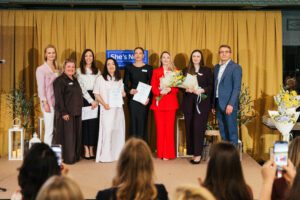
- Grant distribution: Winners in each market received a €10,000 grant plus one year of professional business coaching.
Results & Impact:
2026 Cycle Total Applications: 689 applications from female-led businesses
Market breakdown:
- Finland: 238
- Estonia: 160
- Latvia: 152
- Lithuania: 139
Applications grew steadily across the four-week window: Week 1: 40 total → Week 2: 90 → Week 3: 179 → Week 4: 465 → Final: 689. 74% of all applications were submitted in the final week; 33% in the last 24 hours alone.
Social media drove the highest volume of total applications (359 out of 689). However, among finalists, direct channels were dramatically more effective: email/newsletter and word of mouth together accounted for 56% of all finalists, and 67% of grant recipients came through direct outreach and word of mouth – outperforming social media despite its much larger raw volume.
Companies aged 1-2 years made up the largest finalist group (10 and 8 finalists respectively). Grant recipients were concentrated in the 1-3 year range, confirming the programme’s impact on the most critical growth stage for early-stage female founders.
Business services and wellness were the two most represented industries across all four markets, appearing in the top three in every country. Other strong sectors included lifestyle, social good, art, fashion, health and food.
Testimonials:
“This process has been a fantastic experience for us; the preparation phase alone added so much value to how we look at our business.”
Clicksambo (EE)
“The training session and the one-2-one practice was really helpful. I have had pitch training before, and I found yours was the best.”
Sala Secure (FI)
“The entire experience felt very smooth, professional, and well-managed from start to finish.”
HER OWN ALONE (LT)
“It was a great experience. The training was great, the criteria was well defined, I understood clearly what was evaluated.”
Muuza (LT)
“The guidance was very good, practical and helpful.”
Riskrate (FI)
Key Takeaways:
- Direct, community-embedded outreach (email, word of mouth, NGO partnerships) produces significantly higher-quality applicants than mass social media promotion – 56% of finalists and 67% of grant recipients came through direct channels, despite social media generating the most raw applications.
- Pitch training is as important as grant distribution. The structured pitch preparation – including example deck templates, 1-on-1 dry runs and tech rehearsals – was the most positively reviewed element of the 2026 programme and directly improved the quality of finalist presentations.
- The 74%/33% last-minute application pattern is consistent across all four markets and must be built into communication and support planning for future cycles.
- Multi-country delivery requires genuine market localisation – application volumes, company profiles, top industries and even the challenge mix differed materially between the Baltic states and Finland.
- Our team recommends three adjustments for future editions:
– reduce the female ownership requirement from 50% to 15-30% to open the programme to more startup teams;
– reduce the company age requirement from 1 year to 6 months;
– repurpose a portion of the marketing budget into direct outreach with local scouts per market, targeting 20-30 high-quality applications per country.