Supporting of the first OECD Competitiveness Outlook for Armenia, Moldova and Ukraine
institute



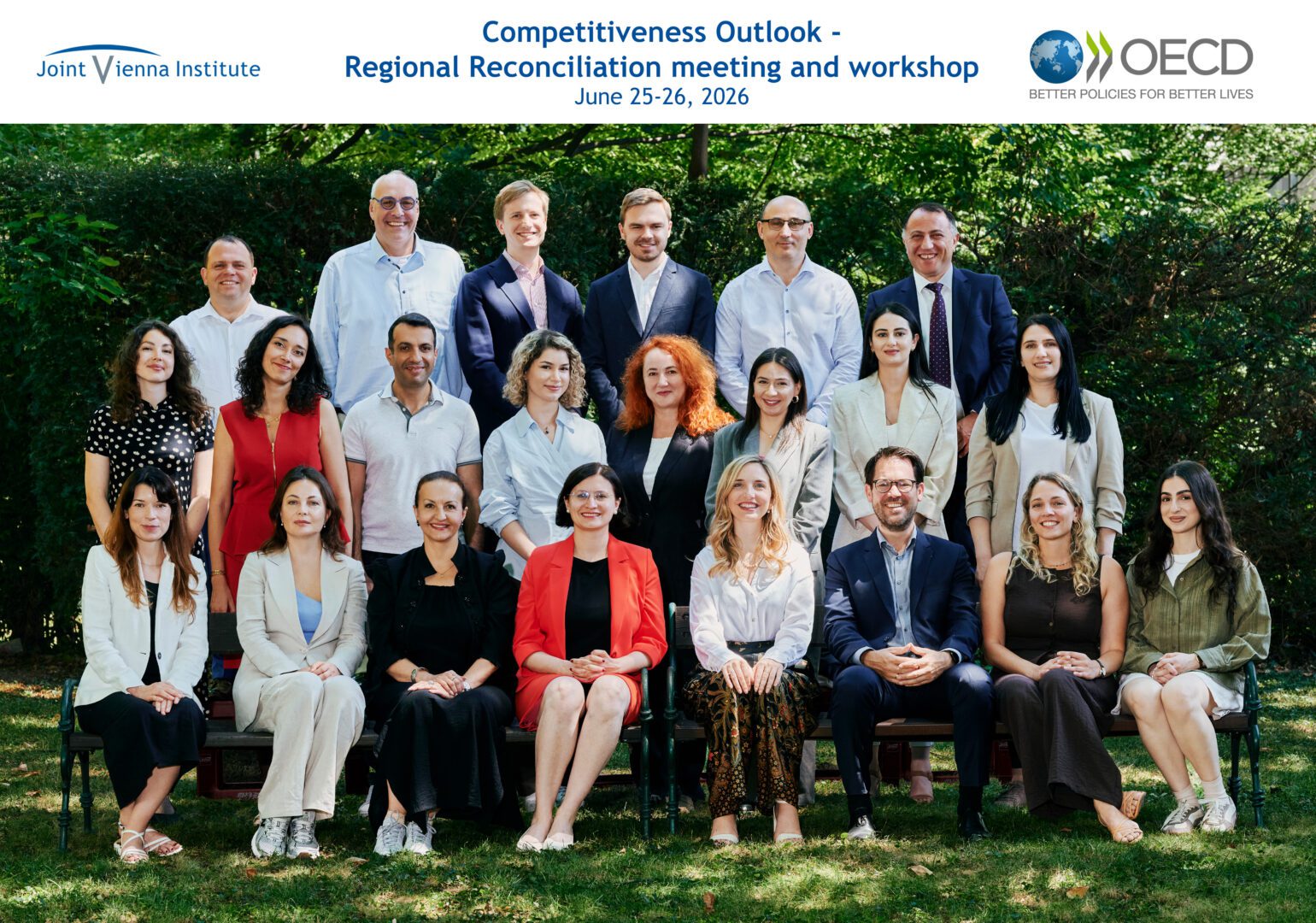
On 25–26 June, government representatives, international experts and Civitta teams from Armenia, Moldova and Ukraine gathered in Vienna for the Regional Reconciliation Meeting of the 2026 Competitiveness Outlook. Hosted by the Joint Vienna Institute, the two-day event provided a platform to review and discuss the preliminary findings of a major regional assessment led by the OECD.
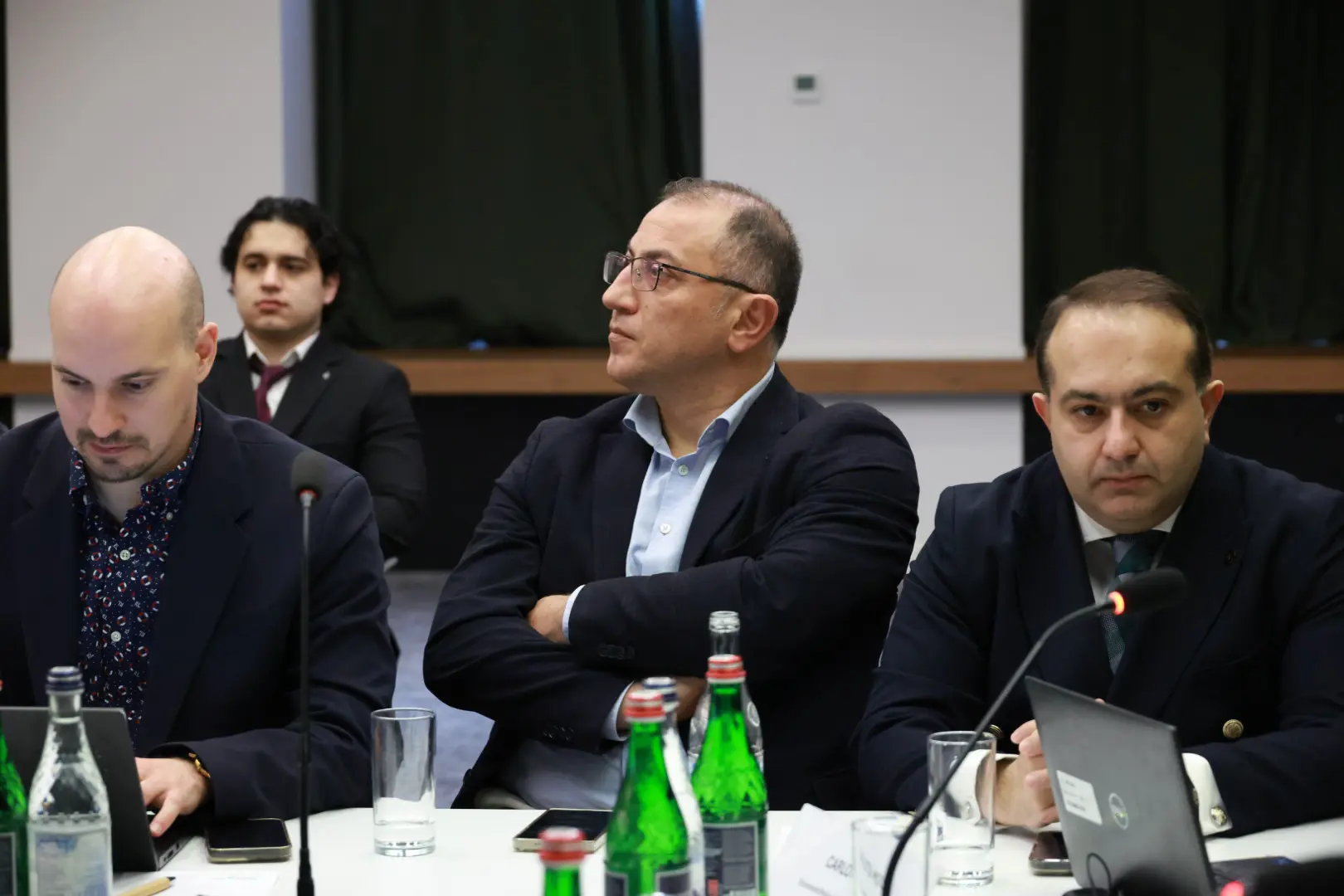
The meeting brought together representatives of ministries, public agencies and national institutions from all three countries, alongside OECD and EU officials, thematic experts and Civitta’s local teams. Participants discussed preliminary assessment scores, addressed information gaps and reviewed initial policy recommendations across three pillars: Business Environment, Connectivity and Trade, and Labour Markets. Dedicated bilateral sessions allowed government representatives to engage directly with OECD specialists and Civitta team members.
A new benchmark for the region
The Competitiveness Outlook 2026 for Eastern Europe and the South Caucasus: Armenia, Moldova and Ukraine is being developed under the EU-funded EU4Business: Empowering Trade and Competitiveness in Eastern Partner Countries project, known as ETaC.
Implemented jointly by the OECD and the International Trade Centre, the project supports Eastern Partner countries in developing evidence-based economic policies, improving their business environments and strengthening trade competitiveness. It is financed by the European Union through the EU4Business initiative.
This is the first time OECD has undertaken a Competitiveness Outlook assessment for Armenia, Moldova and Ukraine. The methodology builds on the OECD’s established experience in the Western Balkans, where successive Competitiveness Outlook assessments have benchmarked reforms, supported regional co-operation and helped economies align their policies with EU and OECD standards.
The new assessment examines reforms across eight policy dimensions, grouped into three pillars:
- Business Environment: investment policy and promotion, financial markets, governance of state-owned enterprises, and competition policy.
- Connectivity and Trade: transport policy and trade policy.
- Labour Markets: employment policy and skills policy.
Together, these areas provide a comprehensive picture of the policies and institutions that influence investment, business growth, market competition, international connectivity, employment and productivity.
Combining OECD expertise with on-the-ground knowledge
Work on the assessment began in 2025, with Civitta offices in Armenia, Moldova and Ukraine joining forces to support the OECD throughout the process.
Working closely with the OECD, Civitta’s regional team contributed to refining the assessment methodology and supported its implementation through the completion of detailed policy questionnaires, the collection and verification of government data, and the analysis of relevant legislation, strategies, institutions and policy measures. The teams also supported the drafting of the three country chapters and contributed to the preparation of the cross-country regional overview.
A central part of this work involved close engagement with national authorities. Civitta teams worked directly with ministries, agencies and other public institutions to collect evidence, clarify recent reforms and ensure that the assessment reflected developments on the ground.
This local work was followed by OECD-led consultations and country events in Armenia and Moldova, as well as an online stakeholder event for Ukraine. These exchanges allowed national authorities to discuss the initial evidence with OECD experts, provide additional documentation and clarify the practical implementation of reforms.
The Regional Reconciliation Meeting held in Vienna represented the next stage of this process: bringing the three country assessments together, validating the emerging regional findings and ensuring that national perspectives were accurately reflected before the reports are finalised.
Supporting reform and European integration
The Competitiveness Outlook is designed not only to assess existing policies but also to provide practical guidance for future reforms.
For Moldova and Ukraine, the findings can support reforms connected to the EU accession process and help national authorities prioritise further alignment with the EU acquis and international good practices.
For Armenia, the assessment provides a structured benchmark for moving closer to EU and OECD standards and strengthening the implementation of reforms under the country’s broader European integration and competitiveness agenda.
The regional format also creates opportunities for peer learning. Although Armenia, Moldova and Ukraine face different economic and institutional circumstances, they share many reform priorities, including improving investment conditions, strengthening competition, developing financial markets, modernising transport and trade systems, and building more adaptable labour markets.

Building on a long-standing collaboration with the OECD
For Civitta Armenia, the assignment builds on several previous collaborations with the OECD in the areas of SME development, competitiveness and digital transformation.
The Armenian team previously contributed to work connected with the SME Policy Index: Eastern Partner Countries 2020 and the SME Policy Index: Eastern Partner Countries 2024. These assessments benchmark SME policies against EU and international good practices and provide country-level recommendations for strengthening entrepreneurship and private-sector development.
Civitta Armenia also supported the OECD’s work on Advancing the Digital Transformation of Armenian Businesses, which examined the conditions for SME digitalisation and proposed policy options for improving support systems, digital capabilities and collaboration within Armenia’s business ecosystem.
The current assignment expands this co-operation to a regional level, bringing together Civitta colleagues from Armenia, Moldova and Ukraine. By combining country-level knowledge with comparative regional analysis, the three offices are helping ensure that the assessment is grounded in local realities while remaining consistent across countries.
Next steps
Following the discussions in Vienna, the OECD and project partners will incorporate stakeholder feedback, close remaining evidence gaps and further refine the policy recommendations.
The final outputs will include dedicated country chapters for Armenia, Moldova and Ukraine, alongside a cross-country overview highlighting regional patterns, common reform challenges and opportunities for peer learning.
The forthcoming reports are expected to provide governments and development partners with a strong evidence base for designing reforms, strengthening competitiveness and supporting closer alignment with European and international standards.