Hack4AI Baltic: building the Baltics’ flagship AI hackathon from scratch
Initiative Overview:
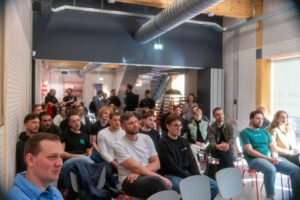
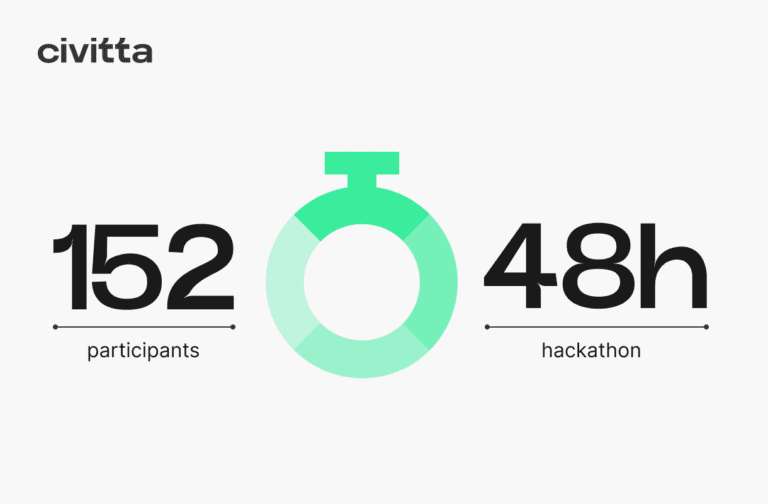
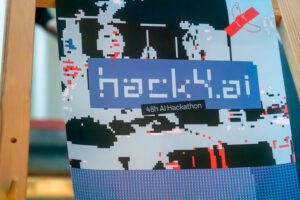
Hack4AI is a 48-hour AI business hackathon conceived, designed and delivered by Helve (since 2026 part of Civitta). What began in 2024 as Latvia’s first international AI hackathon has grown into one of the country’s most prominent AI community events, bringing together programmers, entrepreneurs, designers and enthusiasts to build working prototypes using AI tools – across two consecutive editions in 2024 and 2025.
The Challenge:
As AI tools became broadly accessible in 2023-2024, there was a gap in Latvia’s innovation ecosystem: no dedicated event existed to help entrepreneurs, developers and non-technical idea authors channel this technology into real business prototypes in a structured, competitive environment.
The challenge was twofold: first, to create an event that was genuinely inclusive – where someone without coding experience could participate alongside senior developers – and second, to build enough credibility and community infrastructure for the event to grow year on year.
Latvia’s startup community was fragmented across different organisations and industry verticals. Our team needed to bring these communities together under a single event concept and secure high-profile sponsors, venue partners and mentors who would lend the hackathon credibility and attract serious participants.
Our Approach:
Our team designed and delivered Hack4AI end-to-end across both editions, covering concept, brand, methodology, sponsorship, partnerships, participant recruitment and event operations.
Concept and format: A 48-hour in-person format built around four thematic tracks to maximise inclusivity: Hack4Work (business processes), Hack4Fun (creativity and gaming), Hack4Humans (social impact) and Hack4Myself (personal productivity and wellbeing). This multi-track structure was deliberate – it allowed participants with very different backgrounds to compete in areas relevant to them.
Outreach and recruitment: Helve’s relationships with Latvia’s most prominent startup organisations, incubators, universities and industry associations were activated as outreach partners, with a target of 20+ information partners sharing about the hackathon across their networks.
Methodology and expert support: Each edition provided on-site AI mentors, workshops and masterclasses covering both technical and non-technical aspects of AI prototyping, ensuring participants of all experience levels could make meaningful progress in 48 hours.
Sponsorship and venue strategy: Edition 1 (2024) was hosted at Startup House Riga (Spīķeru kvartāls), one of the very first events at the newly opened startup hub, with Atea Global Services and Ubiquiti as primary sponsors. Edition 2 (2025) scaled the venue to Latvijas Kultūras akadēmija’s “Gara māja”, with Ubiquiti, TeraSky, Google, Intelligent Space, Riga City Council and Latvijas Kultūras akadēmija as supporting partners.
Prize architecture: Prizes were structured to reward more than just winning – from cash grants and pre-acceleration programme spots to Google Cloud credits and co-working space memberships, giving winning teams a real runway after the event.
Results & Impact:
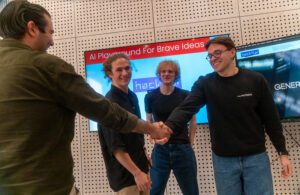
Edition 1 – March 15–17, 2024 | Startup House Riga
- 225 registered participants on Devpost
- €8,000 in prizes distributed across 4 tracks
- Sponsors: Atea Global Services, Ubiquiti, Startup House Riga
- Latvia’s first international AI business ideas hackathon
- Judges: Egita Polanska (CEO, Startup House Riga), Kristaps Elsiņš (Design Team Lead, Ubiquiti), Aleksandrs Ivaščevs (Solution Architect, Atea), Marija Ručevska (Co-Founder, Helve & Practica)
Edition 2 – April 25–27, 2025 | Latvijas Kultūras akadēmija
- 110+ teams registered; 100+ participants from Latvia and abroad
- Prizes: €2,500 FIRSTPICK grant + pre-acceleration spot, Google Cloud credits worth $15,000 (×5 teams), 3-month co-working memberships at Intelligent Space and Startup House Riga, RigaCOMM conference tickets
- Sponsors: Ubiquiti, Google, TeraSky, Latvijas Kultūras akadēmija, Intelligent Space, Riga City Council
- Pre-event team matchmaking session introduced (April 9)
- Judges: Mikus Krams (Trace.Space), Anda Asere (Labs of Latvia), Raimonds Kulbergs (BADideas.fund), Gatis Ozols (VARAM), Jokūbas Vaičiulis (FIRSTPICK)
Community growth: Participation and media coverage grew significantly year-on-year. As Helve co-founder Līva Pērkone (now Associate Partner in Civitta) noted: “Last year’s interest surprised us with its scale. More than 200 participants applied with the most diverse ideas and experience levels. This year, thanks to the massive wave of AI development, we see the potential is even greater.”
Organiser credibility: Hack4AI was delivered by a core Helve team with 25+ international and local hackathons of prior experience, allowing a high-quality event experience from the first edition.
Key Takeaways:
- AI democratisation is real and in demand. Hack4AI demonstrated that when an AI hackathon is explicitly designed for all experience levels – not just developers – the applicant pool is significantly broader and more diverse. Non-technical founders, designers and business professionals participated actively and produced competitive submissions.
- Hackathons need community infrastructure, not just a venue. Our pre-existing relationships with Latvia’s startup, university and industry networks were the critical outreach multiplier. The 20+ partner organisations that shared the event were more effective at reaching the right applicants than direct advertising.
- Prizes that extend beyond the event create better outcomes. Both editions were designed so that winners didn’t just receive cash – they got access to programmes, cloud credits and workspace, giving them the tools to keep building after the weekend ended.
- Multi-track formats unlock participation across verticals. The four-track structure (Work / Fun / Humans / Myself) was the key design decision that made the event genuinely open to participants from any industry or background, and should be replicated in future editions.
- Year-on-year iteration improves quality. The move from Startup House to Latvijas Kultūras akadēmija in 2025, the introduction of a pre-event matchmaking session, and the deepened sponsor ecosystem all reflected learning from Edition 1 – establishing Hack4AI as a maturing, recurring platform rather than a one-off event.