Recovery and Development Strategy for Odesa Region through 2027
instituteClient
Swiss-Ukrainian projects DECIDE and UCORD, on behalf of the Odesa Regional Military Administration (RMA)Client Overview:
Our client was the Swiss-Ukrainian projects DECIDE and UCORD, implemented on behalf of the Odesa Regional Military Administration. The Odesa Regional Development Agency acted as a key partner, serving as a coordination hub and ensuring effective alignment between all stakeholders and the multi-donor project team.
The project was carried out in the field of regional development and strategic planning, covering Odesa Region – one of the largest regions in Ukraine, spanning over 33,000 km² and strategically positioned along the Black Sea and Danube corridors.
Following the full-scale invasion in 2022 and in the context of Ukraine’s EU integration path, the region faced an urgent need to fundamentally reassess its development strategy to reflect the significantly changed socio-economic and geopolitical realities.
The Challenge:
The previous regional development strategy of Odesa Region became effectively obsolete after February 2022. Russia’s full-scale invasion fundamentally reshaped the region’s socio-economic landscape, while Ukraine’s EU candidate status and the updated National Regional Development Strategy 2021-2027 created an urgent need to realign the region’s strategic vision with the new realities.
Key challenges:
– Developing a credible strategic document under active wartime conditions with a constantly shifting external environment
– Engaging a wide range of stakeholders – government bodies, businesses, communities, academic institutions, and international partners – in hybrid and remote formats
– Low capacity among local communities to translate development ideas into bankable projects with identifiable funding sources
– Coordinating across 18+ structural units of the RMA, the Regional Development Agency, and multiple international donors simultaneously


Our Approach:
Civitta served as the lead consultant and methodological driver throughout the entire strategy development cycle – from baseline analysis through to final approval by the Regional Council.
- Phase I: Evidence Base
We began by building a comprehensive evidence base for the Odesa Region strategy. This included desk research across line departments, territorial communities, and public data sources, complemented by field research through resident surveys, business sentiment studies, and public roundtables with experts and civil society.
The outputs of this phase formed a robust analytical foundation, including a detailed socio-economic analysis of the region and the identification of 10 key structural growth constraints. This ensured that all subsequent strategic work was grounded in verified data and stakeholder input rather than assumptions.
- Phase II: Strategic Framework
We then moved into the design of the strategic framework, defining three core priorities – Economy, Human Capital, and Governance – and structuring the strategy around three development horizons: resilience, recovery, and long-term development.
This phase included facilitation of six cross-sectoral working group sessions with 24+ participants from local government, RMA units, academic institutions, and civil society. In parallel, we delivered a series of online training sessions for community representatives focused on translating development ideas into structured, bankable projects.
- Phase III: Implementation Action Plan
Finally, we focused on operationalizing the strategy through a detailed implementation action plan. This included systematic engagement of 18 RMA structural units via correspondence, online consultation rounds, and multiple iterations of project card review.
As a result, 110 project proposals were collected from RMA departments and 149 from territorial communities. We also designed a strategy monitoring framework covering all three strategic priorities and supported its integration across institutions.
The phase concluded with the delivery of a Financial Plan and a Monitoring Plan as standalone annexes to the Action Plan, ensuring full readiness for implementation and tracking.
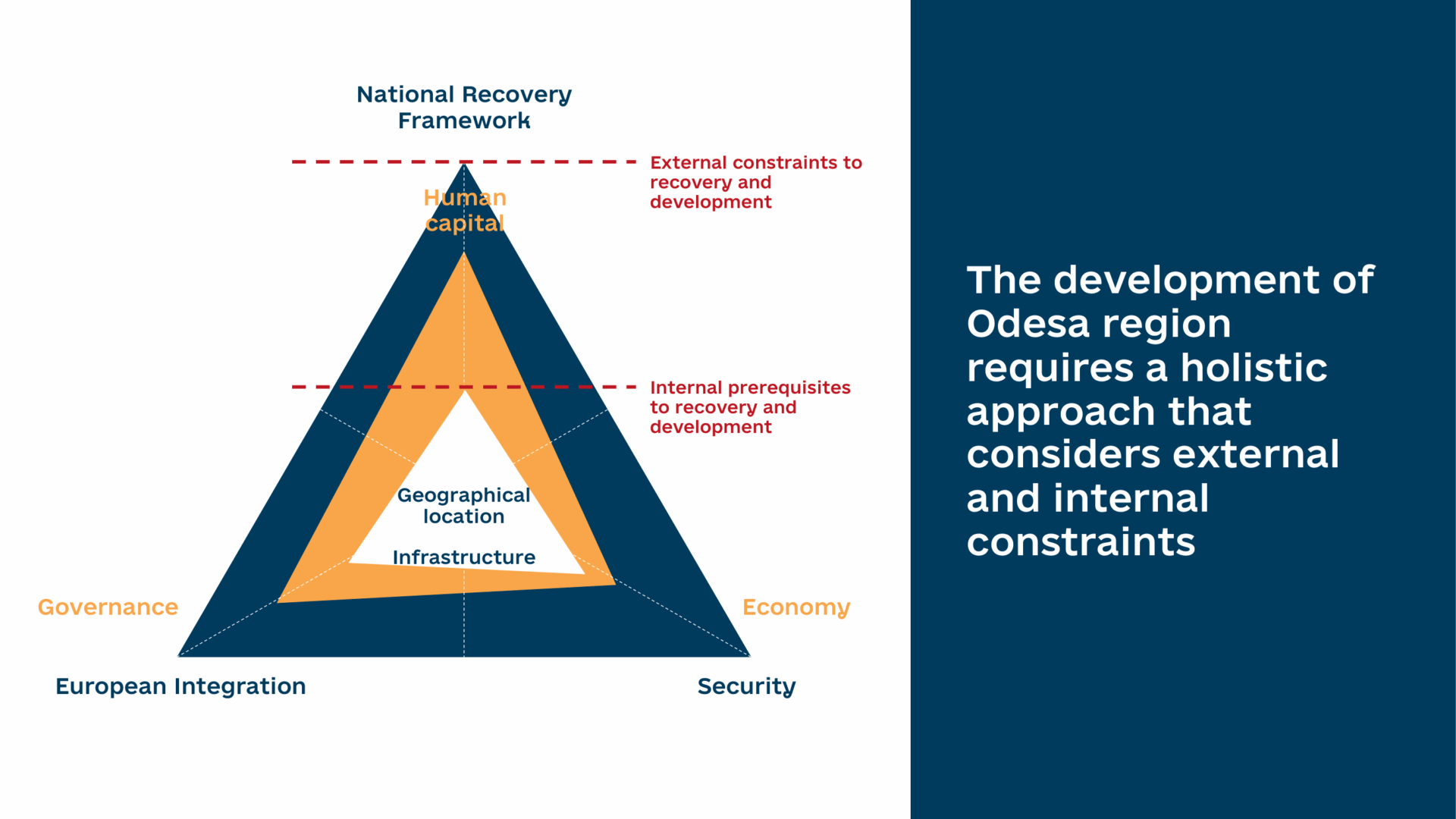
The methodology description is provided in the attached file.
DownloadResults & Impact:
Civitta delivered a comprehensive regional strategy development process that enabled Odesa Region to transition from an outdated strategic framework to a modern, evidence-based planning system aligned with EU integration requirements.
The engagement mobilised over 500 local stakeholders in shaping a shared development vision for the region and resulted in more than 200 project cards included in the final Action Plan, structured across 9 programmes aligned with strategic goals. The process also covered 18 RMA structural units and was formally approved by the Odesa Regional Council in June 2025.
Beyond outputs, the Strategy established a foundation for long-term impact. Odesa Region now has an up-to-date strategic document aligned with international standards, strengthening its positioning as a prospective multi-functional hub of the Black Sea region and reinforcing its investment narrative.
The process also enhanced the capacity of local communities and regional authorities in project planning, funding mobilisation, and strategic management, while creating an effective dialogue platform between government, business, civil society, and international partners. Importantly, it embedded a culture of evidence-based strategic planning at the regional level.
Key Takeaways:
1. Strategic planning remains possible even in crisis contexts: Civitta demonstrated that even under extraordinary circumstances, it is possible to deliver a high-quality strategic document that ensures broad stakeholder engagement and full compliance with international standards.
2. Stakeholder ownership is the foundation of implementation: Actively involving 500+ participants at every stage of development ensures not only document quality, but also the readiness of communities and institutions to implement it.
3. An integrated offer matters: Сivitta provided a full-cycle service – from analytics and strategic framework to Action Plan, Financial Plan, monitoring system, and support through approval – improving overall coherence of the final output and reducing coordination costs for the client.
4. The approach is replicable: The methodology and tools developed within this project can be effectively applied in other regions of Ukraine as well as in countries undergoing similar recovery or reform processes.