USAID HARVEST – Supporting Ukraine’s grain & oilseed sector in wartime
Client
USAIDClient Overview:
USAID used to be the main US government agency for international development aid, active in over 100 countries. They funded this program to support Ukrainian farmers through the war. The program was run by Chemonics International, a large US development firm with experience in agriculture and supply chains across 150+ countries. Civitta joined as their research and analysis partner.
The Challenge:
Before the invasion, Ukraine was one of the biggest grain exporters in the world. The war made farming extremely difficult – and getting crops to market even harder.
- Ports were blocked. Russia shut down Black Sea ports, so Ukraine had to find new export routes through the EU – which were slower and far more expensive.
- Less land was farmed. By 2023/24, the area used to grow wheat, corn, and barley had shrunk by almost a third – due to mines, shelling, and abandoned fields.
- Farming became dangerous and costly. Power cuts, damaged storage facilities, workforce shortage, and mined fields made everyday operations a serious challenge.
- Reliable data was scarce. Official statistics were missing or unreliable – making research much harder than usual.
Our Approach:
Civitta’s job was to give the program team the research they needed to make good decisions – fast. We covered three areas: boosting farm productivity, improving how crops get to market, and fixing policy barriers.
A big-picture market study
We started with a broad analysis of Ukraine’s grain sector – combining desk research, data analysis, and interviews with key people on the ground. This gave the whole team a shared, reliable starting point.
Talking to 100 farms directly
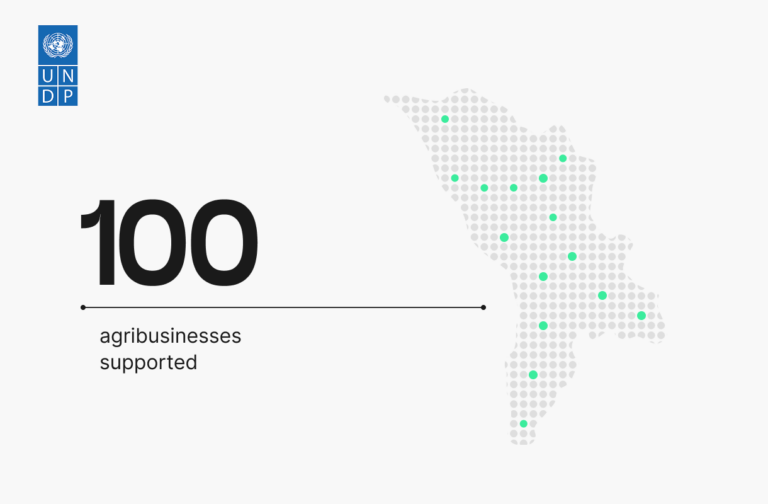
We surveyed 100 agricultural businesses across Ukraine to understand their real-world problems: access to electricity, fuel and seeds, technology use, loans, and staffing.
Focused deep-dives
We produced targeted studies on specific issues: which farming technologies work for small and mid-sized farms; how to improve access to water for irrigation; where the biggest costs and delays are in getting grain from farm to export.
We also looked at how farmers can work together more effectively – through cooperatives, shared contracts, or other models – to get better prices and access to markets.
Policy recommendations
We reviewed Ukraine’s agricultural regulations and produced over 40 specific recommendations for reforms – covering land ownership, farmland markets, and soil protection.
A tool to measure impact
Finally, we built a framework the program could use to measure how its work affected Ukraine’s broader economy – including tax revenues, investment, and trade – and report these results back to donors.
Results & Impact:
Civitta gave the Harvest program team everything they needed to hit the ground running – a clear, evidence-based picture of Ukraine’s agricultural sector from day one.
- One shared foundation. By covering all program areas in one coordinated effort, we made sure the whole team was working from the same facts.
- Real data, not assumptions. Surveying 100 farms directly meant our findings reflected what was actually happening on the ground – not just what official sources reported.
Note: The USAID Harvest program was shut down in January 2025 before reaching its intended outcomes, due to broader changes in US government funding.
Key Takeaways:
- Start strong. In big programs, the quality of early research shapes every decision that follows. Getting it right at the start saves time and money down the line.
- We can deliver under pressure. Producing solid research quickly, with limited data, in an active war zone – that’s a real test. We passed it.
- Ready for what’s next. The expertise and tools we built for Harvest can be applied to other agricultural projects in Ukraine and across the region – for donors, businesses, or governments.