ESTDEV: building EU project capacity in Moldova’s Gagauzia region
Client Overview:
The Estonian Centre for International Development (ESTDEV) is a government-funded foundation responsible for managing and implementing Estonia’s international development cooperation and humanitarian assistance programmes.
In Moldova, ESTDEV supported the IMPACT-ATU Gagauzia programme – implemented by Civitta in partnership with the Regional Development Agency ATU Gagauzia and in cooperation with the Government of the Republic of Moldova.

The Challenge:
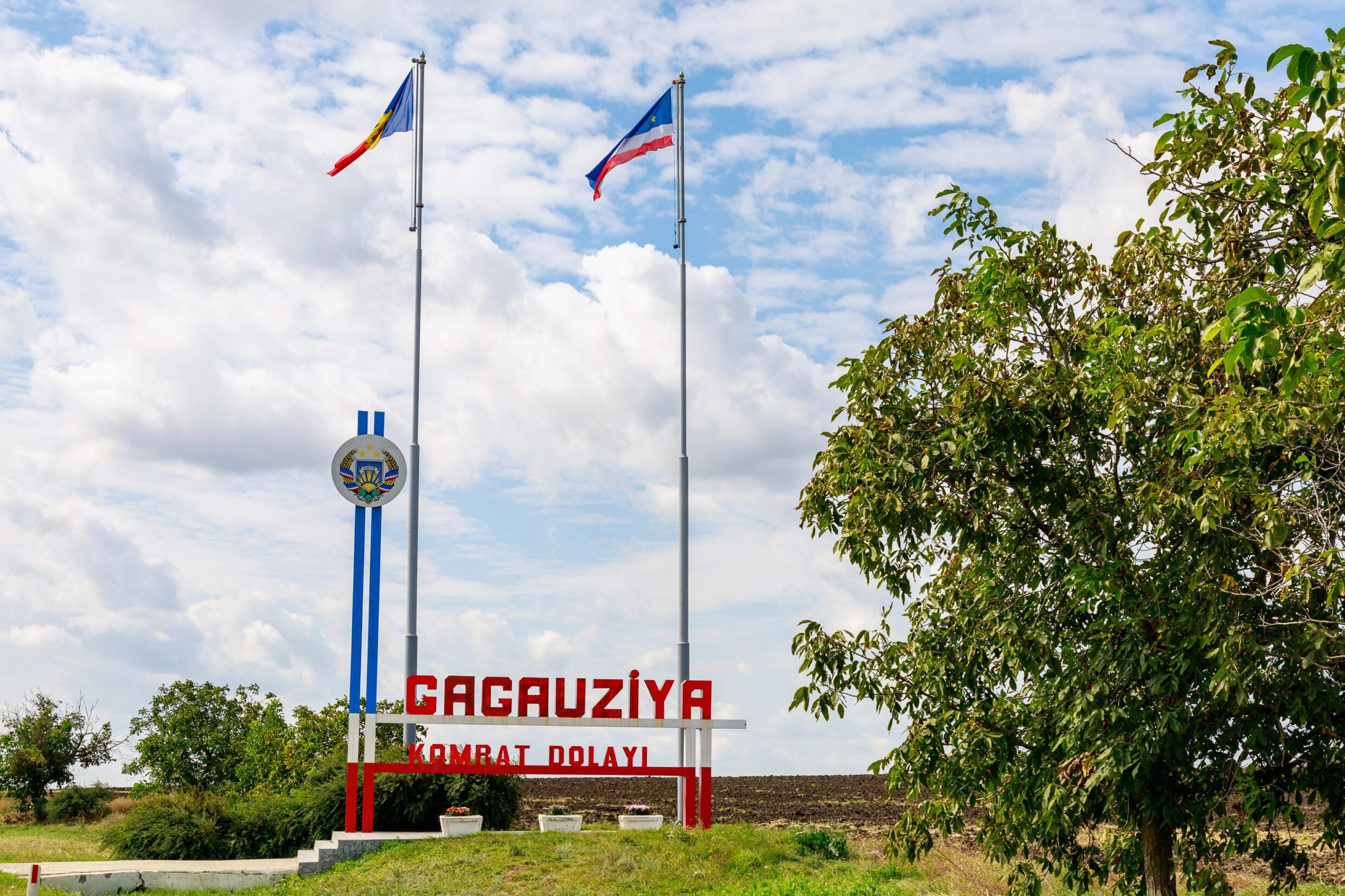
ATU Gagauzia had strong local development needs and a growing interest in EU and international funding. However, regional stakeholders lacked the systematic capacity to turn development priorities into structured, donor-compliant project proposals.
Local public authorities, Local Action Groups (LAGs), NGOs, educational institutions and private-sector actors needed practical skills across the full project cycle – from logical frameworks and budgeting to donor mapping, proposal writing and cross-sector partnership building. Without this foundation, good ideas rarely made it as far as a funding application.
Our Approach:
Civitta designed and implemented the programme as an integrated, multi-phase process – moving participants from needs identification through to donor-ready concepts and submitted applications.
- Ideathon
The programme launched on 9 September 2025 in Comrat (the capital city of the autonomous region of Gagauzia in Moldova) with an ideathon bringing together 99 participants from municipalities, regional agencies, LAGs, universities, NGOs, private-sector actors and youth organisations. Working in thematic groups, participants developed ideas across priority areas including smart mobility, digital transformation, entrepreneurship, governance, youth empowerment, circular economy, agribusiness, cultural heritage and cross-border cooperation. - Modular training
Civitta then delivered a structured training programme covering the full project cycle: Project Cycle Management, Logical Framework Approach, stakeholder and risk analysis, budgeting and financial planning, EU and UN funding opportunities, and communication and visibility requirements. Regional case studies and interactive exercises ensured that learning translated directly into locally relevant project ideas. - Mentoring and proposal development
In the final phase, Civitta experts worked with project teams to refine logical frameworks, strengthen narratives, prepare budgets and align concepts with specific donor requirements. This hands-on mentoring helped participants position their initiatives for funding opportunities including CzechAid, Horizon Europe, UNDP-Switzerland and TÜBİTAK.
Results & Impact:
The programme engaged more than 120 stakeholders – over 60% of them women – across ideathon sessions, training seminars and mentoring. More than 100 participants took part in project-cycle management training, approximately 75% of whom were women.
14 project concepts were developed and refined across regional development priority areas. At least 6 donor-ready applications were submitted to international donors, covering themes including digitalisation, regional competitiveness, energy efficiency, social inclusion, education, cultural heritage, tourism and urban mobility.
The programme also generated significant visibility – reaching over 5,000 views on social media, securing regional and national media coverage, and a prime-time interview on TVR Moldova.
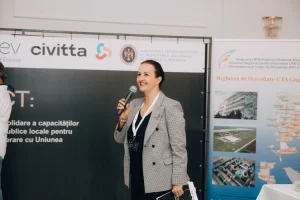
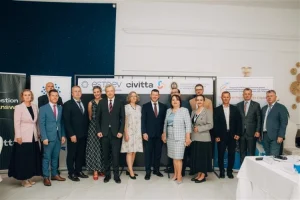
The final event, held on 24 December 2025 at Comrat Municipality Hall, showcased all 14 project concepts to local authorities, development partners, academia and civil society – confirming the achievement of programme objectives and signalling a stronger, more connected local ecosystem for project development in ATU Gagauzia.
Key Takeaways:
- Capacity building only creates value when it leads to action: by combining training with immediate application to real regional initiatives, Civitta ensured that participants didn’t just learn proposal-writing theory – they produced fundable proposals.
- An integrated model outperforms stand-alone training: the combination of stakeholder mapping, participatory ideation, modular training and hands-on mentoring created a pipeline that continues beyond the programme’s end date.
- The model is transferable: following the results in ATU Gagauzia, the same programme is now being launched in Moldova’s North Development Region – confirming both its replicability and the demand for this kind of structured capacity support.