Port Authority Osijek: Construction of a Bulk Cargo Transshipment Terminal
Client
Port Authority OsijekClient Overview:
Port Authority Osijek is a Croatian public institution responsible for inland waterway transport, port infrastructure, and logistics. It manages and develops the ports and harbours along the Drava River in Osijek, overseeing port infrastructure, public water areas, concessions, and navigation and safety functions.
As a public sector body rather than a commercial enterprise, the Authority was established in 2001 to manage and develop Osijek’s port area. The project is based entirely in the City of Osijek, within Osijek-Baranja County, in Croatia’s Pannonian NUTS 2 region.
The Challenge:
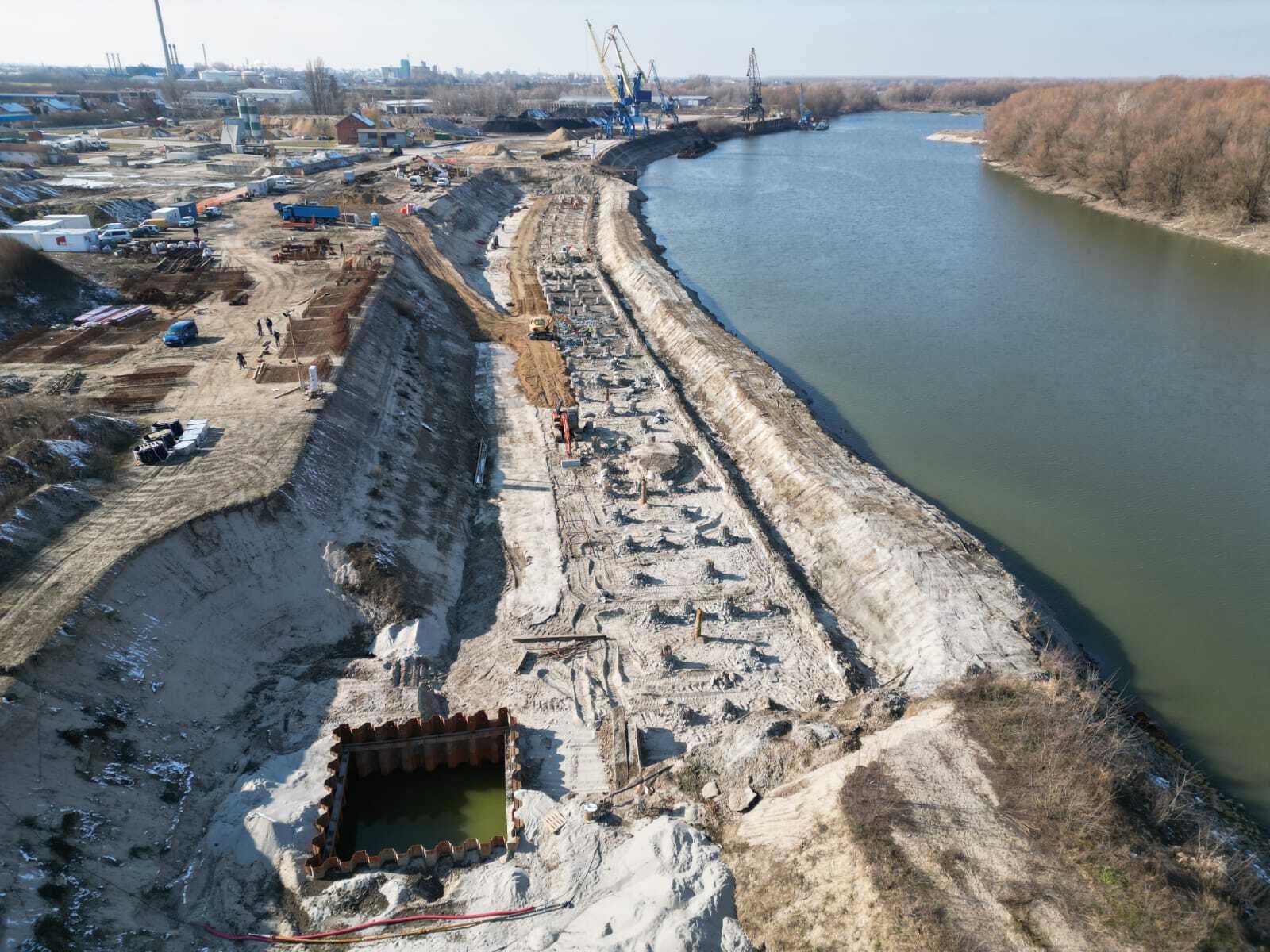
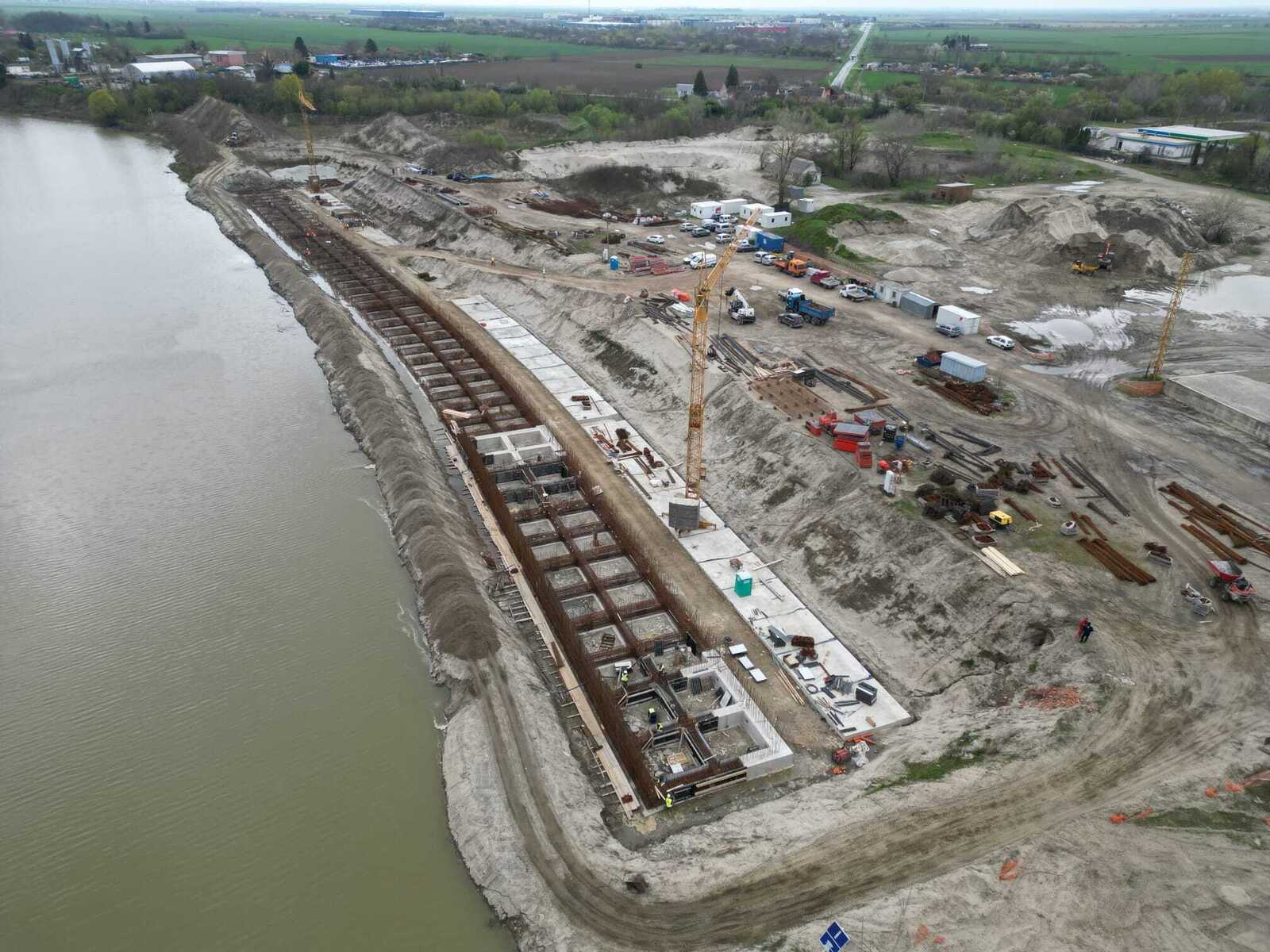
Osijek previously relied on a bulk cargo terminal built in 1974 in the city centre, close to the Clinical Hospital Centre Osijek. The old terminal was taken out of operation in 2015 when works started on a major municipal water and utility infrastructure project. At the same time, the city planned to redevelop the former port area as an urban waterfront and pedestrian zone.
Port Authority Osijek therefore needed to relocate cargo handling to the New Port area and complete a modern terminal capable of integrated inland waterway, rail and road transshipment.
Without the new terminal, the Port of Osijek would not be able to handle bulk cargo in the required way. The project proposal identified a risk of cargo being redirected to rail or road transport at higher cost, vessels bypassing Osijek because adequate transshipment conditions were unavailable, and a broader loss of logistics and regional development potential.
The investment was also expected to reduce traffic pressure and potential environmental impacts in the city centre and near the hospital.
Specific constraints:
- The investment had to be implemented as a phased major infrastructure operation, with part of the works completed by 31 December 2023 and the remaining scope transferred into Phase II.
- The funding structure had to remain consistent with the previously approved state aid framework and with the rules of the Competitiveness and Cohesion Programme 2021 to 2027.
- The project combines quay construction, road access, railway infrastructure, crane infrastructure, cargo handling equipment and utility networks, requiring coordinated technical and implementation planning.
- Long term operation had to be compatible with public ownership of the infrastructure and a transparent future concession model.
Our Approach:
PJR (part of Civitta since 2026) supported the structuring of a technically complex port investment into a coherent EU funded project framework. The core task was to connect the engineering scope with the funding logic, implementation schedule, budget, project governance and measurable results, while maintaining continuity between the first implementation phase and Phase II.
The project required close coordination with Port Authority Osijek because technical, financial and grant-related decisions were interdependent. The application had to reflect the status of construction works, the remaining scope after Phase I, the planned procurement and supervision structure, and the client’s long-term model for managing and concessing the new infrastructure.
PJR (part of Civitta since 2026) provides continuous support to the client regarding all administrative, financial and public procurement issues.
Key methodologies:
- A phased project architecture was used to separate the costs and works completed by the end of 2023 from the remaining Phase II investment, while preserving one overall investment logic and a consistent results framework.
- The technical design was translated into defined project activities, procurement and supervision needs, financial categories, implementation responsibilities and a measurable output indicator.
- The application framework incorporated grant eligibility, state aid considerations, project management, financial control, visibility obligations and post completion sustainability arrangements.
- The investment rationale linked local urban and environmental needs in Osijek with wider transport, intermodal logistics and regional competitiveness objectives.
Results & Impact:
The project is designed to restore and modernise bulk cargo handling capacity in Osijek, improve safety for vessels and cargo operations, support efficient intermodal transport and reduce operating costs through new equipment and technology. Relocating the activity from the city centre also supports the redevelopment of the former port area and reduces traffic and environmental pressure in a sensitive urban location.
The infrastructure is planned to remain in public ownership, with Port Authority Osijek managing it on behalf of the Republic of Croatia. The future terminal operator is expected to be selected through an open, public, transparent and non-discriminatory concession procedure. This model is intended to secure durable use of the investment and establish modern bulk cargo handling capacity as part of Osijek’s wider logistics and economic development.
The client values support regarding technical component of the project as well as continues administrative support including public procurement procedures. The client recognizes value and stability of the PJR (part of Civitta since 2026) support as added value since the PJR was included in project management from the very beginning of the project.
Outcomes defined in the project:
- EUR 27.32 million in total eligible investment for Phase II, supported by EUR 25.22 million in grant funding.
- 240 metres of new or upgraded port quay, with the target linked to obtaining the use permit.
- A 240 metre quay structure with two berths, approximately 300 metres of access road, approximately 610 metres of railway track and approximately 285 metres of crane track.
- A receiving hopper and cargo transshipment equipment, a transformer station, water supply and drainage systems, electrical supply and external lighting.
Key Takeaways:
- Large public infrastructure investments benefit from early integration of technical design, grant rules, financial structuring and implementation planning. In this project, the phase boundary was particularly important because the client had to preserve the logic of one investment while clearly separating completed works, remaining costs and future deliverables.
- Civitta’s contribution was to translate a complex port construction programme into a structured funding and implementation framework that could be assessed against EU programme requirements. The work connected the physical investment with measurable results, financing, governance and long term operation.
- The approach is directly relevant to ports, intermodal terminals, railway and road infrastructure, logistics hubs and other public investments that combine high capital expenditure, multiple technical packages, state aid considerations and EU funding requirements.